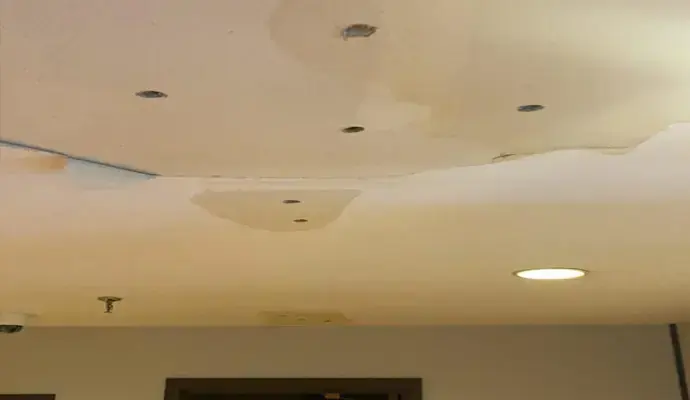
In Lomita, 55.4% of occupied homes were rented at the 2020 Census, and many buildings along the main corridors share walls. When a stain spreads across a ceiling, the water often starts in someone else's home.
Key takeaways
- A ceiling leak in a Lomita apartment, condo or duplex can start in the unit above or inside a shared wall, so trace the water before blaming the roof.
- A ceiling that bulges or sags is holding water: stay out from under it and switch off power to nearby lights.
- Tell the neighbor above or the property manager in writing, and photograph the stain, the drip and the date.
- The drying team opens the ceiling in a controlled way, removes wet insulation and drywall, and dries the framing until readings reach the goal.
- A leak that crosses units can wet walls and floors well beyond the stain, so readings should cover every affected room.
Why shared walls make ceiling leaks a Lomita problem
Lomita had 8,593 housing units at the 2020 Census, and more than half of the occupied ones were rented. In many buildings, one household's plumbing sits directly over another household's ceiling.
A ceiling stain raises one question first: which home is the water coming from? The answer decides where water damage restoration in Lomita starts.
Renters, owners and the buildings between them
The city's residential land uses run from single family areas to medium density areas that allow duplexes and high density areas for multifamily housing. Along Narbonne Avenue, Cypress Street and Pacific Coast Highway, many multi family, commercial and mixed use buildings share walls.
In a shared wall building, a leak does not stop at the wall of one unit. It follows framing, pipe chases and ceiling cavities into the home next to it or below it.
Older buildings, older fittings
About 78.9% of Lomita's housing units were built before 1980. Many of the supply and drain fittings above a ceiling have been working for decades, and a worn fitting can start to weep long before it fails.
Reading the stain: where the water is coming from
The shape, the timing and the location of a stain all give clues. A ring with a darker brown edge usually means water has been arriving over time, while a sudden wet patch points to a burst supply or an overflow.
Clues from timing
- A stain that grows on dry days points to plumbing above, not to rain.
- A stain that appears only after rain points to the roof or an exterior wall.
- Dripping that starts while a washing machine or dishwasher runs upstairs points to that appliance.
Clues from location
- Marks near a bathroom wall can point to a tub, shower or toilet supply in the unit above.
- Brown spots around recessed lights can mean water is running along the ceiling cavity to the fixture.
- A stain along the edge where the ceiling meets a wall can mean the water is coming down inside that wall.
First steps when water drips from the ceiling
Water keeps spreading while the source runs. The goal is to stop the source, protect people and belongings, and keep a record.
A ceiling that bulges or sags is holding water and can fall without warning, so nobody should stand under it.
- Tell the neighbor above or the property manager right away, and put it in writing.
- Ask the unit above to close the shutoff valve at the leaking fixture or appliance, or the water supply to that unit.
- Switch off the breaker for any room where water is near light fixtures or outlets.
- Set buckets under drips, and keep clear of any ceiling that bulges or sags.
- Move furniture, rugs and electronics out from under the stain.
- Photograph the stain, the drip and the date.
What the drying team does with a wet ceiling
In ceiling leak water damage, the drying team starts with moisture readings and thermal imaging to learn how far the water spread. Water follows framing, so it often reaches walls and floors well past the visible stain.
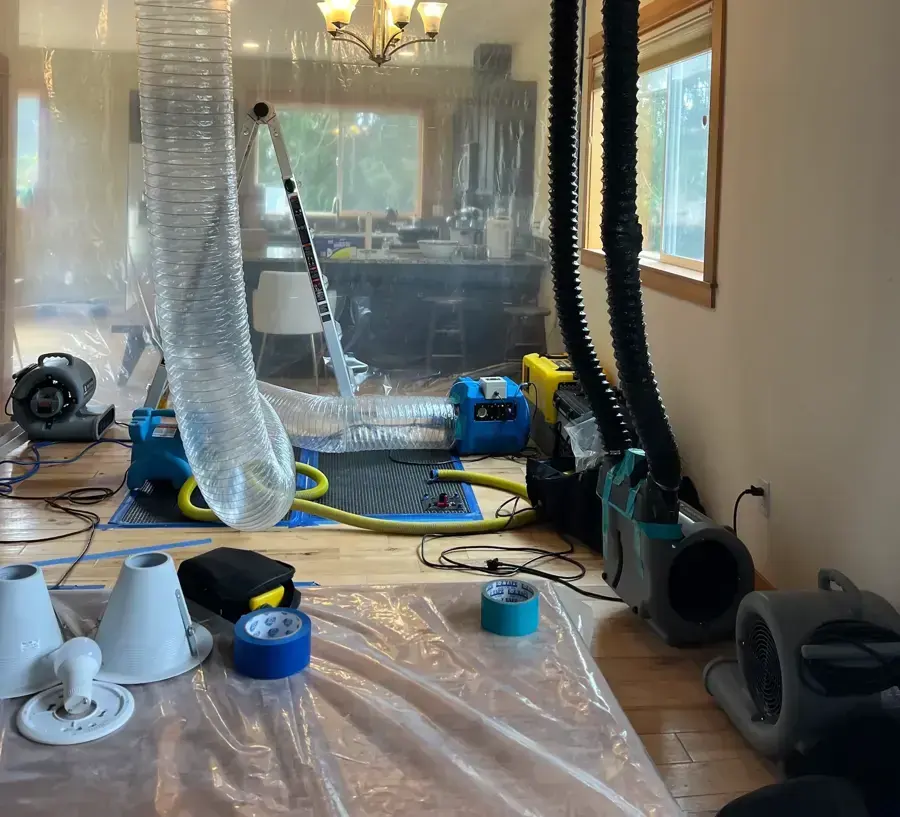
Wet drywall and insulation come out in a controlled cut, and the team checks lights and wiring before any equipment runs. The framing is then dried with air movers and a dehumidifier until readings reach the goal of within 2 to 4 points of a dry reference.
- Moisture mapping across the ceiling, the walls and the floor below.
- Controlled removal of wet drywall and insulation.
- Electrical checks at lights and outlets before equipment runs.
- Air movers and a dehumidifier set to the room, with daily readings.
When the source is a washer, dishwasher or supply hose
Not every ceiling leak comes from a burst pipe. A washer hose, a dishwasher drain hose, an ice maker connection or a toilet supply can leak slowly inside a cabinet or wall for days.
Water from those leaks follows the pipe or the floor edge into the wall cavity below. By the time a stain shows in the lower unit, the unit above may also have wet cabinets and flooring, and both homes need readings.
Appliance and supply hose leak cleanup covers the source unit as well as the unit below.
What to expect while the equipment runs
Once the ceiling is open and the equipment is set, the air movers and dehumidifier run around the clock. The team returns on a schedule to take readings and move equipment as areas dry.
The wall and ceiling openings stay until the readings reach the goal, because closing them early traps moisture. Patching, texture and paint come after drying, and they are separate from the drying itself.
- Keep furniture out of the wet zone until the final readings are done.
- Keep pets and children out of the work area, where the floor may be wet and the ceiling open.
- Tell the team about any other stains, soft spots or musty smells, because they can be another path of the same leak.
Documenting a leak that crosses units
When water crosses from one home to another, records matter. Dated photographs, moisture readings in each affected room and a written note of when the leak was reported all help sort out what happened.
Who is responsible depends on the cause, the lease and the insurance policies involved. The restoration crew documents the loss and does not decide that question, so renters and owners should check with their own insurers.
The same ceiling work is described in ceiling leak water damage for the wider harbor area.
Questions
How do I know the leak is from the unit above and not the roof?
A stain that grows on dry days points to plumbing, while one that shows up only after rain points to the roof. Moisture readings and thermal imaging help the crew trace the path.
Should I cut a hole in a bulging ceiling myself?
No. A bulging ceiling holds water and may sit near wiring. The drying team opens it in a controlled way once the power to the area is off.
Who pays for a ceiling leak that starts in another unit?
It depends on the cause, the lease and the insurance policies. The restoration crew documents the loss and does not decide who is responsible.
How long does a ceiling take to dry?
Time depends on how much water got in and which materials are wet. The team checks readings daily, and repairs begin after the framing is dry.
Does a ceiling stain mean the drywall must be replaced?
A small, dry stain may only need sealing and paint. Drywall that was soaked, sags or stays wet is usually removed.