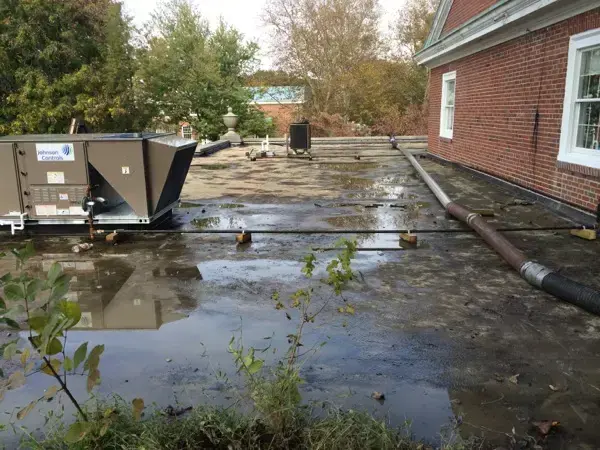
In Signal Hill, rain comes in winter after a dry summer, and the first big wind of the fall can set up the first leak. Wind does not usually soak a house while it blows. It loosens the roof, and the water arrives with the next rain.
Key takeaways
- A windstorm can loosen shingles or flashing without any water coming in, so the leak shows up at the next rain.
- The city's hazard plan says windstorm risk comes especially from falling trees, and that infected, dying eucalyptus trees are more vulnerable to severe Santa Ana winds.
- Check from the ground and from the attic with a flashlight, and never climb onto a wet or wind damaged roof.
- The roofer repairs the roof, while the restoration crew removes wet insulation and drywall and dries the structure.
- A roof repair that exposes framing or plywood may need a city permit, so ask the Building Safety Division before the work starts.
How wind sets up a roof leak
A windstorm rarely causes a leak while it blows. It loosens a few shingles, lifts flashing at a vent or chimney, or drops a branch on the roof, and the opening shows itself at the next rain.
Signal Hill has a Mediterranean climate with rainy winters and dry summers, according to the city's General Plan. A roof can carry wind damage through the dry months without anyone noticing, and Santa Ana winds tend to blow in the fall and winter, around the start of the rainy season.
- Loose or missing shingles and tiles.
- Lifted or bent flashing around vents, chimneys and skylights.
- Cracks or punctures from falling branches.
- Gutters and drains packed with leaves and debris blown onto the roof.
What the city's hazard plan says about wind and trees
According to the Signal Tribune, the city's 2024 hazard mitigation plan names earthquake, landslide, windstorm, drought and flood as its five main hazards. The plan also says high winds can occasionally cause tornado like damage to local homes and businesses.
The plan says the windstorm risk comes especially from falling trees. It adds that eucalyptus trees in the city are prone to pest infestation, and that infected, dying trees are more vulnerable to severe Santa Ana winds.
For an owner, the lesson is to look up as well as around: a weak tree near the roof is a leak waiting for a storm. The full range of services is listed under water damage restoration in Signal Hill.
Checking the roof and attic after a windstorm
Most checks can be done without leaving the ground. A roof that has been hit by wind and branches is slick and unsafe, even when it looks dry.
A quick look after every strong wind, and again before the first rain, catches small problems while they are still small.
- From the yard: look for missing shingles, lifted flashing, bent vents and branches resting on the roof.
- In the attic: use a flashlight to look for damp insulation, dark stains on the underside of the roof deck and daylight where there should be none.
- On the ceilings: watch for brown rings, bubbled paint or a damp smell after the first rain of the season.
- In the gutters and drains: clear leaves and debris so water can leave the roof.
When a tree or limb hits the roof
A fallen limb can puncture the roof deck and leave an open hole. Water then runs through the insulation and into the ceiling below.
The first goals are safety and keeping the rain out. Stay out from under a ceiling that bulges or sags, switch off power to wet rooms from a dry spot, and photograph the damage before anything is moved.
- A roofer can tarp the opening to keep more water out.
- A tarp is temporary, so the roof still needs a proper repair.
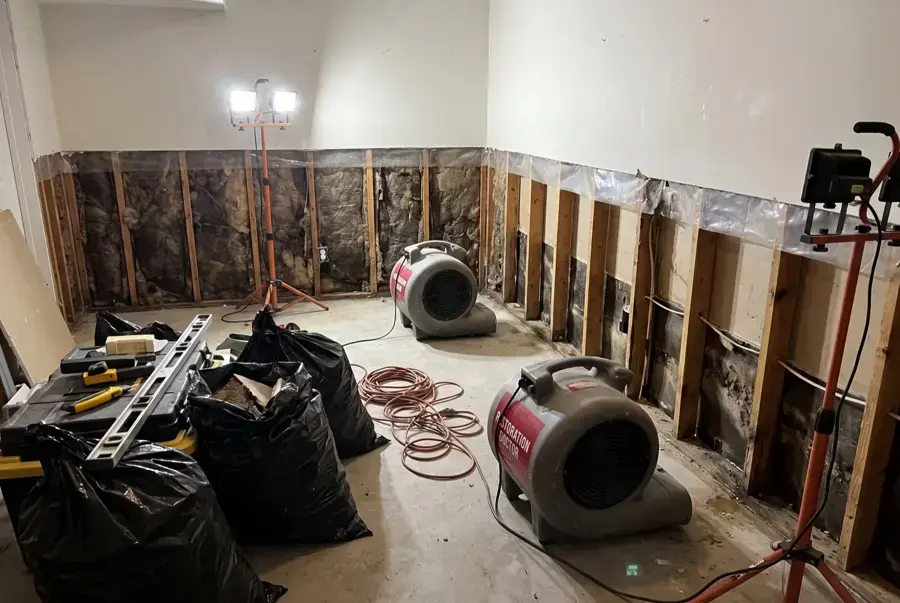
- The restoration crew removes wet insulation and ceiling material and dries the framing.
- Photographs of the roof, the tree and the inside damage, with dates, show how the water got in.
The city's permit handout and roof repairs
The city's Building Permit Required handout says roofing, stucco and siding work over 100 square feet needs a permit when framing, plywood or the water resistant barrier is exposed or disturbed. It also says painting, papering and floor coverings are exempt.
A leak repair can expose framing or plywood, so it is worth asking the Signal Hill Building Safety Division what applies to a specific job before the work starts.
What the drying covers, and who does what
Drying after a roof leak
In roof leak water damage, the work starts with moisture readings through the attic, the ceiling and the walls below. Wet insulation comes out, because it holds water against the framing.
A wet ceiling is handled under ceiling leak water damage. The drying team opens it in a controlled way, checks lights and wiring first, and runs air movers and dehumidifiers until readings reach the dry reference.
- Moisture mapping through the attic, ceiling and walls.
- Removal of wet insulation and soaked ceiling material.
- Electrical checks at lights and fans before equipment runs.
- Drying with daily readings until the framing reaches the goal.
The roofer and the restoration crew
The two jobs are separate. The roofer repairs the roof so no new water gets in, and the restoration crew handles the water that already did.
Wet materials left alone for 24 to 48 hours can start to grow mold, so the drying and the roof repair work best when they are planned together.
Roof leaks in condos, townhomes and apartments
About 41.5% of Signal Hill's housing units are in buildings of 5 or more units, the largest share, and the city has condo and townhome communities such as the 28 condos in the Hilltop Area and the 81 townhomes at Cityview.
In a building with several units, a roof leak usually shows first on the top floor and can then travel down through walls and ceilings to the units below. Each affected unit needs its own readings, and the same approach applies to roof leak water damage across the harbor area.
- Report the leak in writing to the property manager or the association.
- Photograph the stains in every affected unit, with dates.
- Ask for moisture readings in the units below the top floor, not only in the unit with the stain.
Questions
Can a windstorm cause a roof leak days later?
Yes. Wind can loosen shingles or flashing without letting any water in, and the leak shows at the next rain.
Should I climb onto the roof to check?
No. A roof hit by wind or branches is unsafe even when it looks dry. Look from the ground, check the attic with a flashlight, and let a roofer inspect the roof.
Is a tarp enough to stop the damage?
A tarp is temporary protection. The roof still needs a proper repair, and any wet insulation and ceiling material still need to be removed and dried.
Does a roof repair need a permit in Signal Hill?
The city's handout sets a permit threshold for roofing work over 100 square feet when framing, plywood or the water resistant barrier is exposed or disturbed. The Building Safety Division can confirm what applies to a specific job.
What does the restoration crew do that the roofer does not?
The roofer repairs the roof. The restoration crew removes wet materials, dries the structure to a measured goal and documents the loss.