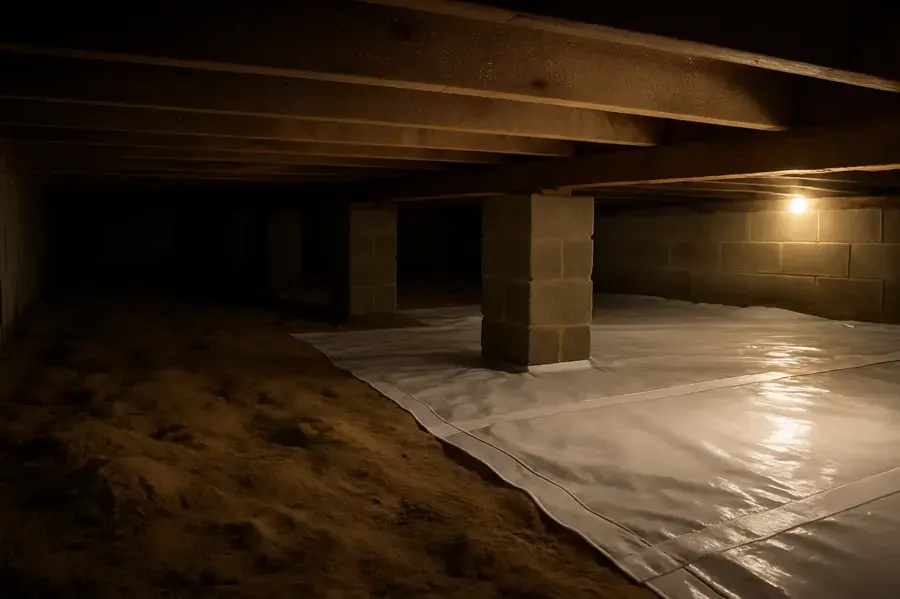
Many Wilmington homes from the 1920s through the 1960s are bungalows on raised floors, with a crawl space underneath. After a heavy winter storm, the water that causes the most trouble is often the water nobody can see.
Key takeaways
- Standing water under a raised floor is not the same as damp air: a flashlight at the access hatch shows a shiny surface, wet piers or sagging insulation.
- Soft, bouncy or cupped floors and wet baseboards point to trouble below, even when the rooms above look dry.
- Stay out of a flooded crawl space: wiring, storm runoff and cramped footing make it a job for a crew with protective gear.
- The extraction crew pumps first and pulls wet insulation, then the drying team dries the joists and subfloor until readings reach a dry reference.
- Photograph the high water mark and ask your insurer early, because coverage for outside storm water depends on the policy.
Why Wilmington bungalows collect water under the floor
Much of Wilmington was built from the 1920s through the 1960s. Among those homes are bungalows on raised floors, each with a crawl space between the soil and the floor framing, plus postwar homes on concrete slabs and many apartment buildings.
Low ground and a shallow water table
Wilmington sits on low, flat ground beside the Port of Los Angeles, with a shallow water table. Storm runoff heads for the harbor and the Dominguez Channel, and on the west side the Wilmington Drain carries it to Machado Lake.
When the ground is already wet, water that reaches a foundation has few places to go. A crawl space is the lowest open space in the house, so it is often the first place water collects.
A few heavy storms instead of steady rain
Rain here falls mostly from November to March, and often in a few heavy atmospheric river storms rather than gentle showers. The storms of January 2023 and February 2024 flooded streets across Los Angeles County.
A house that stayed dry through months of sunshine can take on water in a single night. That is why the first big storm of the season matters most, and why storm and flash flood cleanup often starts with a look under the floor.
How to tell standing water from damp air under the floor
Standing water and damp air both feel like trouble, but they call for different responses. Pooled water needs pumping, while damp air needs the source found and the space dried.
- From outside: a flashlight through the access hatch or a foundation vent shows a shiny surface, wet piers or insulation hanging down.
- From inside: floors that feel soft, bouncy or cupped, and baseboards that look wet, can mean the framing below is soaked.
- A sour or earthy smell in the rooms above, or a sudden rise in humidity, often follows water under the house.
- A water bill that jumps with no change in use points to a leaking supply pipe rather than storm runoff.
What to shut off and what to leave alone
If a supply pipe could be feeding the water, close the main shutoff first. Storm water keeps arriving from outside, but a broken pipe keeps filling the crawl space until the valve is closed.
Electrical safety comes before everything else. Wiring and junction boxes often run through a crawl space, so standing water near them is a shock hazard.
- Close the main water shutoff if a pipe could be involved.
- Switch off breakers for any circuit that runs under the house, from a dry spot only.
- Stay out of the crawl space: storm runoff is Category 3 water, and the footing is cramped and slippery.
- Photograph the high water mark on the piers and the foundation vents before anything is moved.
- Lift boxes and rugs off any floor that feels soft.
What the extraction crew pulls out first
In crawl space water removal, the extraction crew pumps out the standing water first. A pump handles the open water, and a portable extractor takes up the film left on the soil.
Wet insulation comes out next. Batts that sag between the joists hold water against the wood, so the mitigation team removes them instead of drying them in place.
Storm runoff carries soil, oil and debris from the street, so the crew treats it as Category 3 water. The soil and framing are cleaned with an EPA-registered antimicrobial before the drying equipment goes in.
- Pumps and portable extractors remove standing water and the film on the soil.
- Wet insulation and debris come out of the joist bays.
- A plastic vapor barrier can hold water on top of it, so the crew drains it before it is dried or replaced.
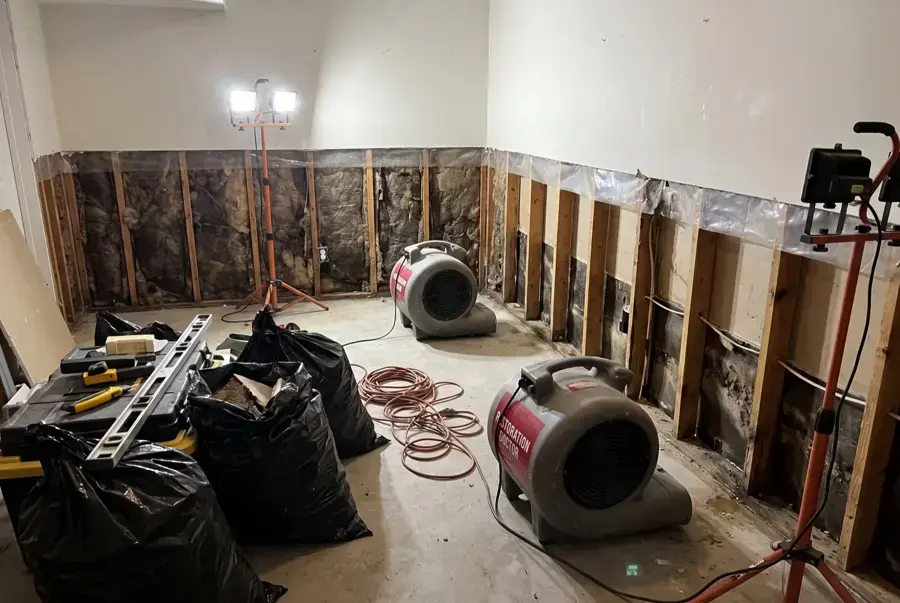
Drying the joists and the subfloor
Water that sat under a house, even briefly, soaks into the joists and the subfloor. Before any equipment goes down, the drying team maps the moisture with meters and thermal imaging.
Structural drying then runs through the crawl space access, with air movers and a dehumidifier sized to the space. Hardwood or laminate above can cup, so the team checks the rooms over the crawl space too.
Daily readings tell the team when the wood is dry. The goal is within 2 to 4 points of a dry reference material, and the equipment stays until the numbers say so, because wet wood left alone for 24 to 48 hours can start to grow mold.
- Moisture mapping before equipment goes down.
- Readings on the joists, the subfloor and the floor above.
- Equipment that stays until the readings reach the goal.
Documenting the loss for a claim
The claim file for water under a house holds a moisture map, daily drying logs, the water category and timestamped photos taken before anything comes out. Those records show what was wet and how it dried.
Many homeowner policies treat outside storm water differently from a sudden pipe failure, so coverage depends on the policy. Read the wording or ask your insurer early, and use the drying time estimator for a rough planning range.
Keeping storm water out next time
The simplest fix is moving storm water away from the foundation. Downspouts that empty against the house, soil that slopes toward the walls and soil piled over the foundation vents all let runoff reach the crawl space.
- Run downspouts well away from the foundation.
- Keep the soil sloping away from the house, and keep the foundation vents clear of soil and leaves.
- Have a plumber check hose bibs and any visible supply pipe under the house.
- After the first heavy storm of the season, look in through the access hatch with a flashlight, from outside the crawl space.
Questions
How long does a crawl space take to dry?
It depends on how much water collected, how long it sat and how wet the joists and subfloor became. The drying team checks readings daily, and the equipment stays until the framing reaches the dry reference.
Is water under my house dangerous to touch?
Storm runoff is Category 3 water, and the crawl space may hold wiring. Stay out and leave it to a crew with protective gear.
Does the insulation have to be replaced?
Wet insulation is removed because it holds water against the wood. New insulation goes back after the framing is dry.
Can the crawl space look dry while the floor still feels soft?
Yes. A floor can stay soft after the surface water is gone because the joists and subfloor are still wet. Readings, not touch, decide when the framing is dry.
Does homeowners insurance cover storm water under the house?
It depends on the policy and on whether the water came from outside or from a sudden pipe failure. Read the wording or ask your insurer, and keep the photos and drying logs.