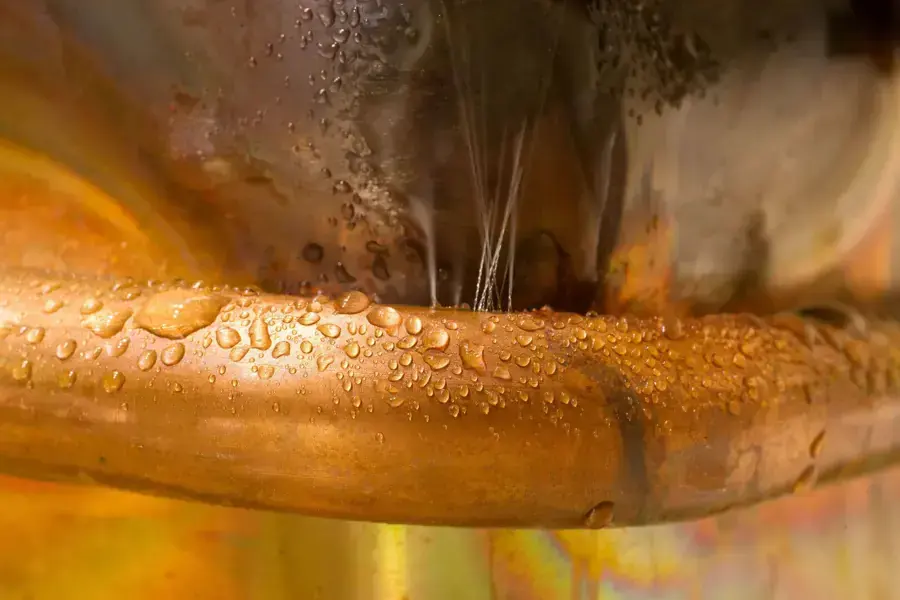
Galvanized steel supply pipe in Wilmington's homes from before 1960 rusts from the inside and tends to fail at threaded joints inside the walls. The first sign is often a stain on paint, not a puddle on the floor.
Key takeaways
- Galvanized steel supply pipe in pre 1960 Wilmington homes rusts from the inside and tends to fail at threaded joints inside walls.
- A hidden wall leak shows up as bubbling paint, a swollen baseboard, a damp spot, or a water meter that moves when every fixture is off.
- Close the main, switch off power to the wet wall and photograph the damage. The pipe repair is a plumber's job, and the drying is a separate one.
- The drying team maps the wall with a moisture meter and thermal imaging, opens only what is wet and dries the cavity to a reading.
- Water follows studs and floors, so the wall below, the floor beside it and, in apartments, the unit underneath all need checking.
Why galvanized pipe fails from the inside
Rust that starts where nobody can see it
Galvanized pipe is steel with a zinc coating. Over decades the coating wears away and the steel rusts from the inside, which narrows the pipe and weakens it.
Wilmington was built up from the 1920s through the 1960s, with bungalows, postwar homes and many apartment buildings. In the homes built before 1960, galvanized steel supply pipe rusts from the inside and fails at threaded joints inside the walls.
Rust inside the pipe can also narrow the flow, so weak flow at a tap sometimes shows up before any leak does.
Threaded joints inside the wall
The weak spot is usually a threaded joint. Cutting threads thins the wall of the steel, so the rust eats through there first, and many of those joints sit inside walls and ceilings.
A joint that weeps for weeks can soak the framing long before a stain reaches the paint.
Signs of a leak inside a wall
Many leaks inside walls drip slowly. By the time a stain appears, the framing and the bottom of the drywall may already be wet.
Supply pipe runs to bathrooms, kitchens, laundry areas and the water heater, so the walls around those spots are the first places to look.
- Paint that bubbles, peels or shows a brown stain on a wall with no roof or window above it.
- A baseboard that swells, cups or pulls away from the wall.
- A wall that feels damp, soft or cool to the touch.
- A musty smell near one wall or room.
- A water meter that keeps moving when every fixture and appliance is off.
- Rusty water at the tap or weaker flow, which can point to corroded pipe.
What to do first when a wall leaks
Closing the main stops the leak at its source, because supply pipe stays under pressure whenever the water is on. Everything else is about limiting damage and keeping a record.
- Close the main water shutoff, then open a faucet to release the pressure in the pipes.
- Switch off the breakers for outlets and lights on the wet wall.
- Photograph the stain, the damp area and the water meter.
- Move furniture and belongings away from the wall.
- Leave the drywall alone: cutting into a wall can hit wiring or pipe.
- Call a plumber for the pipe and a restoration crew for the water.
Where the water goes inside a wall
Water from a leaking joint runs down the inside of the wall, along the studs, to the bottom plate. There it soaks the lower drywall, the baseboard and the edge of the floor.
Drywall pulls water upward like a wick, so a wall can be wet above the leak as well as below it. In a two story home or an apartment building, the water can also follow the framing down into the ceiling of the room or unit below.
A complete check covers more than the stained spot:
- The wall below the stain and the other side of the same wall.
- The floor and the flooring along the wall.
- Cabinets and closets that share the wall.
- The ceiling in the room or unit underneath.
In a raised floor bungalow
Water that reaches the bottom of a wall can pass through the floor edge into the crawl space. It can soak the subfloor from below and the joists, so a wet wall may mean a wet crawl space too, and that part of the job falls under crawl space water removal.
In an apartment building
The wall may be shared, and the framing may run on from one unit to the next. A leak in one unit can wet the unit beside it or below it, so report it to the property manager right away and ask that neighboring units be checked.
How the drying crew finds and dries the cavity
In burst pipe water damage, the first job is learning how far the water went. The tech who does the walkthrough uses a moisture meter and thermal imaging to map the wet area without opening the whole wall.
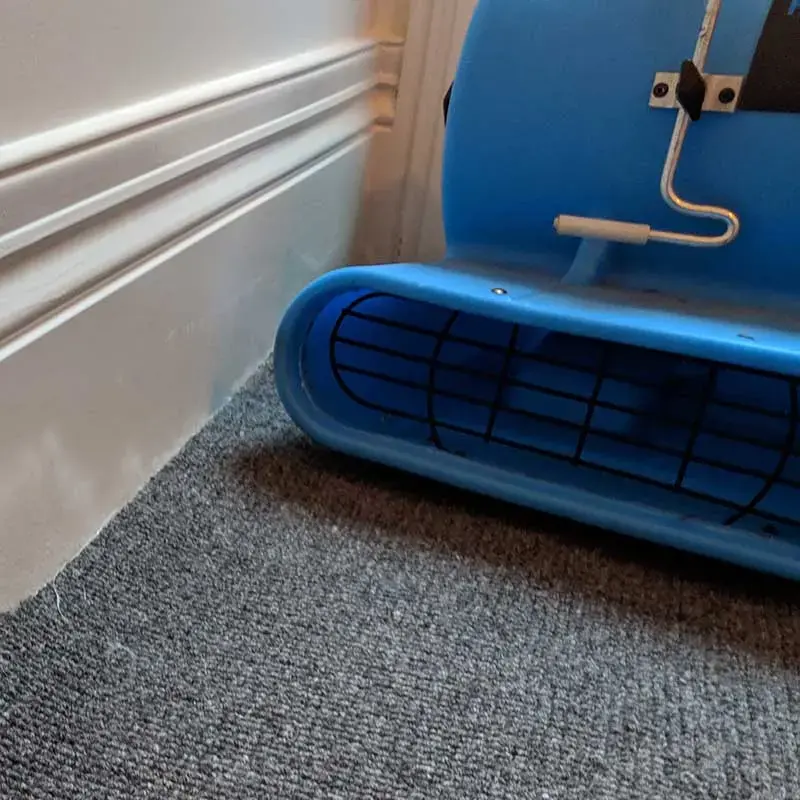
Wet drywall and insulation are cut out above the highest wet reading, and the framing is dried with air movers and a dehumidifier. Structural drying continues with daily readings until the studs reach the dry reference, within 2 to 4 points of a dry material.
- Moisture mapping with a meter and thermal imaging.
- A controlled cut above the highest wet reading.
- Air pushed through the cavity, often through small openings near the bottom of the wall.
- Daily readings until the framing is dry.
The pipe repair is a plumber's job
The restoration crew does not replace pipe. A plumber repairs or replaces the failed joint or section, and the drying usually starts once the leak is stopped.
A leak at one joint says the system is aging, so many owners ask a plumber to look at the rest of the supply pipe. The pipe and sewer risk check shows how build era and pipe type shape the risk.
- Which joint or section failed, and what the pipe looks like inside.
- Whether nearby joints show the same rust.
- Whether a repair will hold or the whole section should be replaced.
- Photographs of the failed joint, which belong in the claim file.
Documenting a hidden leak for the claim
Insurers often treat a sudden leak differently from a slow one, so records of when the damage was found matter. The claim file holds the photographs, the moisture map, the daily drying logs and the plumber's invoice.
Coverage depends on the policy, so read the wording or ask your insurer early. In an apartment, report the leak to the property manager in writing.
The same steps apply to water extraction when water has reached the floor.
Questions
How do I know if my pipes are galvanized?
Galvanized pipe is gray steel, often with threaded fittings and rust at the joints, while copper is reddish brown. A magnet sticks to steel but not to copper, and a plumber can confirm the material.
Will the drywall have to be replaced?
Drywall that was soaked, soft or stained is usually cut out above the highest wet reading. Drywall that stayed dry is left in place.
How long can a hidden leak run before it shows?
A slow leak can run for weeks, which is why the framing may be wet before a stain appears. The water meter is one clue.
Can the leak be repaired without opening the wall?
Most hidden joints sit inside the wall, so some opening is usually needed. The plumber decides what the repair needs, and the drying team limits the cut to what is wet.
Does insurance cover a hidden pipe leak?
It depends on the policy and on whether the leak was sudden or gradual. Read the wording or ask your insurer, and keep the plumber's invoice with the drying records.