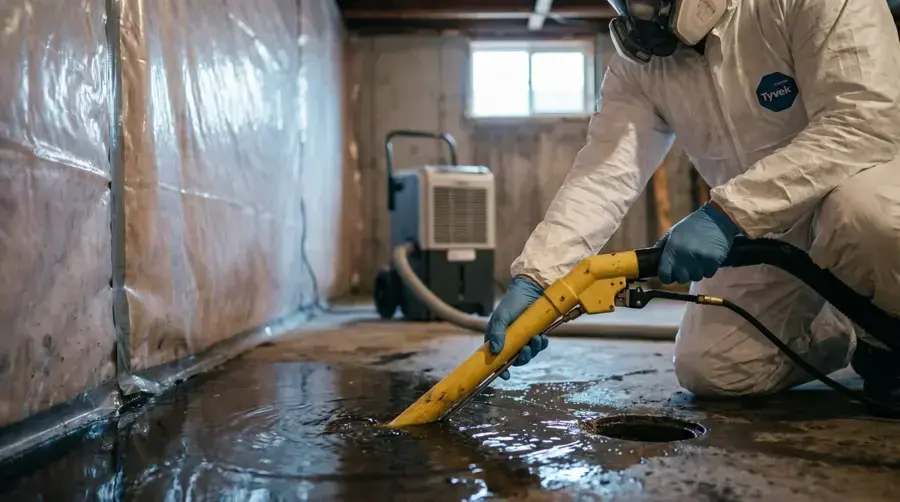
Carson saw a major public sewage spill in December 2021, when a large pipe near Calas Park collapsed. A backup inside one house is a much smaller event, but it starts with the same question: is the problem in the public sewer or in the pipes at the home?
Key takeaways
- Sewage in a home is Category 3 from the first minute: keep people and pets out, stop using water and leave the cleanup to a crew with protective gear.
- The city lists Los Angeles County Sewer Maintenance as the contact for sewer problems, while the restoration crew handles what is inside the house.
- The December 2021 spill began with a collapsed 48 inch pipe and shows how large a public sewer failure can be.
- The crew removes porous materials that touched the water, disinfects hard surfaces and dries the structure to the IICRC S500 goal.
- Photograph everything before cleanup, and ask your insurer early whether the policy includes sewer backup.
A public sewer problem or a problem in the home's own pipes?
A public sewer problem and a house drain problem can look alike at first. The difference shows in where the water appears and how many drains are involved.
Sewage usually shows at the lowest outlets first, because the water follows gravity. A tub, a shower base or a floor drain on the lowest level is where a backup tends to appear.
- Several low drains backing up at once, such as a tub, a shower and a floor drain, can point to a blockage past the branch pipes.
- One fixture backing up while the rest drain normally usually means a clog in that fixture's own drain.
- Sewage coming out of a manhole cover in the street is a public sewer sign.
- Gurgling toilets and slow drains in the lowest part of the house often come before a backup.
Who the city lists for sewer problems
The city lists Los Angeles County Sewer Maintenance as the contact for sewer problems. Carson is also home to the Joint Water Pollution Control Plant, which the Los Angeles County Sanitation Districts run.
Whichever way the sewer question comes out, the restoration crew deals with the contaminated area inside, and the full list of services for homes is under water damage restoration in Carson.
A plumber can tell whether a blockage sits in the pipes at the home or beyond them. A plumber's visit usually answers three questions:
- Which drains are slow or backed up, and which run normally.
- Where the blockage sits, found with a camera or by clearing the drain.
- Whether the cause is grease, roots or a broken pipe.
What the December 2021 spill shows about scale
The Calas Park pipe collapse
In December 2021 a 48 inch pipe near Calas Park collapsed and pushed sewage out of a manhole on 212th Street in Carson for nearly 24 hours. The spill released 8.5 million gallons, ran through a neighborhood into the Dominguez Channel and shut beaches from Orange County through Rancho Palos Verdes over New Year's weekend.
Calas Park is a 9 acre recreation area, and it was linked to some of the 14 sewage spills that hit the region from 2018 through 2021.
What it means for one home
That event was a collapsed pipe and a large public sewer failure. A backup in a single house is a far smaller event, but the water is handled the same way: as sewage, and as Category 3.
Why sewage is Category 3 from the first minute
Sewage carries bacteria, viruses and parasites, so it is Category 3 water the moment it leaves the pipe. How clear it looks or how small the spill is does not change that.
Porous materials that touched it, such as carpet, pad, insulation and the lower part of drywall, are removed instead of dried. Hard surfaces are cleaned and disinfected.
Time matters because porous materials keep absorbing while the water sits. The longer carpet pad and drywall stay saturated, the more of them has to be removed.
- Stop using sinks, tubs, toilets and the washing machine so no more water enters the drain.
- Keep children, pets and anyone with a weak immune system out of the area.
- Turn off power to wet areas from a dry spot, and turn off the heating and cooling system so air does not carry contaminants through the house.
- Do not use a household vacuum or fans on the contaminated area.
- Photograph the affected area and the water before cleanup begins.
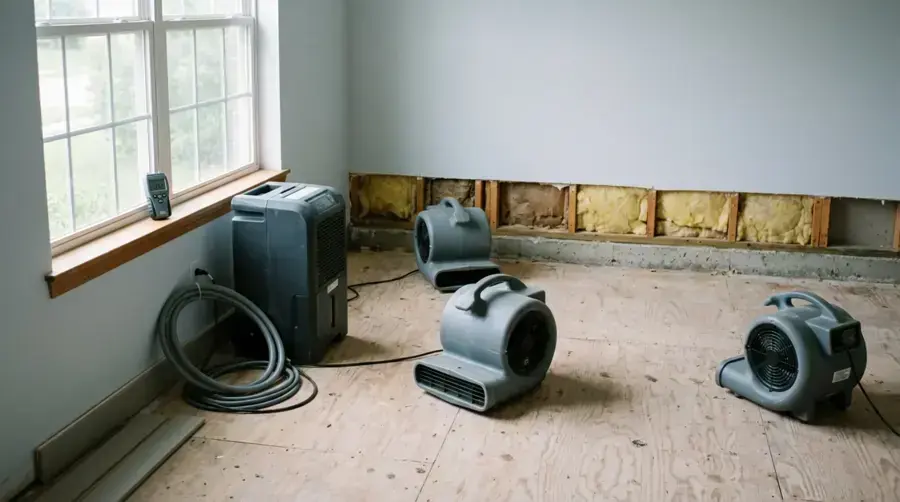
What the cleanup crew removes, cleans and dries
In sewage backup cleanup, the crew wears protective gear and starts by extracting the liquid. The mitigation team then removes porous materials that soaked it up and bags them for disposal.
Hard surfaces and framing are cleaned and disinfected with an EPA-registered antimicrobial, which has to stay wet on the surface for its labeled dwell time. HEPA air scrubbers and containment keep contaminated air out of clean rooms.
Structural drying follows. Air movers and dehumidifiers run until the readings reach the dry reference, within 2 to 4 points of a dry material.
- Extraction of the liquid, done in protective gear.
- Removal of porous materials that soaked up the water.
- Cleaning and disinfecting of hard surfaces and framing.
- Containment and air scrubbing while the work runs.
- Drying, with daily readings, until the structure reaches the goal.
Belongings, odor and rebuilding
Sewage odor lingers because porous materials hold it. Removing the carpet, pad and drywall that soaked up the water ends the odor, while a deodorizer only covers it for a while.
Belongings follow the same logic. Hard items such as tile, glass and many plastics can be washed and disinfected, while upholstery, mattresses and paper goods are usually discarded.
When the crew finishes, the structure is clean and dry. Rebuilding the drywall, flooring and paint is a separate job that starts after the readings reach the goal.
- Photograph belongings before they leave the house, because the list supports the claim.
- Ask about keepsakes before anything is thrown out.
- Keep receipts for anything bought because of the loss.
Shared drains and the insurance file
About 13.5 percent of Carson's housing units are in buildings of five or more units, and about 6.5 percent are mobile homes. In a building with shared drains, a backup at the lowest unit can reach the neighbors, so each affected home needs its own photographs and readings.
A sewage claim file holds photographs taken before cleanup, the water category, the list of materials removed and the drying logs. Many policies treat sewer backup as separate coverage, so ask your insurer early, and know that mitigation should not wait for the answer.
The same standard runs through sewage backup cleanup across the harbor area.
Questions
Who is the contact for a sewer problem in Carson?
The city lists Los Angeles County Sewer Maintenance as the contact for sewer problems. A restoration crew handles the cleanup inside the building.
Is a small sewage backup still Category 3?
Yes. Sewage is Category 3 from the first minute, whatever the amount, and the porous materials it touches are removed.
Can I clean up sewage myself?
It is safer to leave it to a crew with protective gear, containment and an EPA-registered antimicrobial. Wiping the surface does not clean carpet, pad or drywall that soaked up contaminated water.
Why does the crew run air scrubbers?
HEPA air scrubbers and containment keep contaminated air and dust from reaching clean rooms while materials are removed and surfaces are treated.
Will insurance cover a sewage backup?
It depends on the policy. Many policies treat sewer backup as separate coverage, so read the wording or ask your insurer, and keep the photographs and drying logs.