Dry-down with measured readings
Structural Drying and Dehumidification in Carson, CA
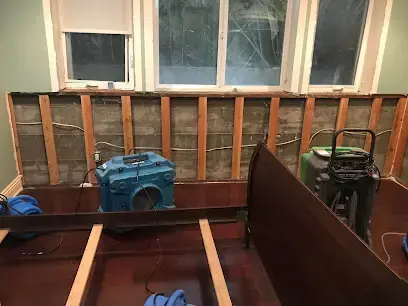
Water that soaks framing, subfloors and wall cavities needs more than fans. The drying team sets dehumidifiers and air movers to a plan, then measures every material until it reads dry.
(888) 563-9619Call about Carson structural drying- LGR dehumidifiers
- Wall cavity drying
- Readings at every visit
Right away
First steps for structural drying in Carson
- 1
Keep the heat steady
Keep indoor temperature normal, since warm air helps equipment pull moisture.
- 2
Let air circulate
Open closet, cabinet and interior doors so air can reach damp surfaces.
- 3
Leave equipment running
Keep air movers and dehumidifiers on, and do not move them unless the crew says so.
- 4
Avoid early repairs
Hold off on paint, flooring and new drywall until readings confirm the structure is dry.
How the work runs
How the Carson crews approach structural drying
Rapid local response
The response team dispatches 24/7 across Carson and nearby communities, and active water is treated as urgent at any hour.
IICRC S500 drying standard
IICRC S500 is the industry drying standard: structural drying, not just surface drying, with equipment sized to each room.
Claim-ready documentation
Moisture maps, daily drying logs and timestamped photos taken before any demolition go into the claim file.
Local water know-how
The walkthrough checks the source, the slab or subfloor and the rooms next door, not only the room where water showed up.
What it usually costs
What does structural drying cost in Carson, CA?
Structural drying in Carson runs from $1,500 for one area to $14,000 or more for a Class 4 loss or a whole floor. The materials, the rooms involved and the equipment days set the price.
A single drying zone
$1,500 to $3,000
- Air movers and one dehumidifier
- Light moisture loss
- Readings at each visit
Several rooms with open walls
$3,000 to $7,000
- Cavity drying
- Multiple dehumidifiers
- Daily psychrometric logs
Class 4 loss or entire floor
$7,000 to $14,000+
- Desiccant dehumidifiers
- Slab or plaster drying
- Extended monitoring
These are typical ranges, never a quote: the water category, the square footage, the material class and how fast drying started move the number most. The water damage cost calculator gives a closer planning range, and the restoration contractor who responds sets the real scope after the walkthrough.
Carson has dry summers and a wet season from October to May, and about 80.8 percent of its homes were built before 1990. Older plaster, thick framing and layered flooring hold water longer than new drywall, which is why drying plans are built around measurements instead of a calendar.
How structural drying works
Wet materials release moisture into the air, and dehumidifiers remove it while air movers keep fresh air moving across surfaces. Without the dehumidifier the moisture just settles back into walls and floors. Moisture also hides in pad, baseboards and framing that look dry on the surface, so every material is metered.
Equipment and measurements
- LGR dehumidifiers for most clean-water losses
- Desiccant units for plaster, concrete and cold spaces
- Air movers aimed along walls, floors and ceilings
- Temperature and humidity logged at every visit
- Thermal camera sweeps to catch missed damp spots
Wall cavities can be dried through small holes with directed air, or opened fully when insulation or drywall is saturated. Class 4 losses in dense materials such as plaster, hardwood and concrete take the longest and call for specialty equipment.
Knowing when a structure is dry
Dry is a measured result, not a feeling. The drying team compares moisture content in each material with a dry reference point taken from unaffected areas of the same building, and equipment stays until the numbers match.
Most losses reach this phase after water extraction, and larger ones such as storm and flash flood cleanup rely on it for the long dry-down. The logs also back up the insurance file.
Step by step
The structural drying process in Carson
- 1
Map
Meters and a thermal camera find wet materials.
- 2
Plan
Equipment is sized to the loss class.
- 3
Monitor
Humidity and moisture content are logged at each visit.
- 4
Release
Equipment leaves when every material reads dry.
Where the crews work
Structural drying across Carson and nearby communities
Structural drying covers houses, apartments, offices and shops across Carson, along corridors like Del Amo Boulevard and Avalon Boulevard and in Dominguez Hills, Carousel Tract and the Calas Park area, with the same measured standard in each.
The same service nearby: structural drying in Wilmington, Lomita, Signal Hill.
More water services
Related water damage services in Carson
Common questions
Questions about structural drying in Carson, CA
Why not just run fans?
Fans move wet air around, but only dehumidifiers remove the moisture from it. Without that step, water vapor settles back into walls, flooring and framing, and the dry-out stalls.
What does dry actually mean?
Dry means each material tests at its normal moisture level, not just that the surface feels dry. Wood, drywall and concrete each have their own targets, so every one is measured separately.
Do older Carson homes dry differently?
Often, yes. Plaster, hardwood and layered flooring hold moisture longer than newer drywall and carpet, and Carson has many older homes, so those materials get extra monitoring.
Why does the equipment run so long?
Dense materials release moisture slowly, and stopping early lets the remaining water move back into drier areas. The crew keeps the equipment going until the numbers say stop, which is why no two jobs match.
Does insurance cover drying?
Drying that follows a covered water loss is normally part of the claim, since it prevents larger damage. Daily logs, photos and equipment records show the adjuster what was done and why.
Emergency dispatch, Carson, CA
Finish the dry-out with real readings in Carson
The drying team sets dehumidifiers and air movers to the class of the loss, logs temperature and moisture at every visit and removes equipment only when each material reads dry.