Drying after water damage
Structural Drying and Dehumidification in Lomita, CA
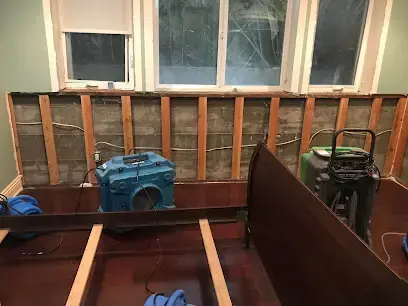
Water that reaches walls, subfloors and framing needs controlled drying, not just open windows. The drying team places air movers and dehumidifiers by the readings and adjusts them every visit until the structure is dry.
(888) 563-9619Call about drying a wet Lomita building- LGR dehumidifiers
- Wall cavity drying
- Daily psychrometric readings
Right away
First steps for structural drying in Lomita
- 1
Stop the source
Close valves and have the leak repaired so drying is not undone by new water.
- 2
Hold the climate steady
Keep the building closed and the thermostat steady so equipment works efficiently.
- 3
Remove wet finishes
Pull soaked carpet pad, baseboards and damaged drywall so air can reach what stays.
- 4
Do not move equipment
Leave air movers and dehumidifiers where they are set, since placement follows the readings.
How the work runs
How the Lomita crews approach structural drying
Rapid local response
The response team dispatches 24/7 across Lomita and nearby communities, and active water is treated as urgent at any hour.
IICRC S500 drying standard
IICRC S500 is the industry drying standard: structural drying, not just surface drying, with equipment sized to each room.
Claim-ready documentation
Moisture maps, daily drying logs and timestamped photos taken before any demolition go into the claim file.
Local water know-how
The walkthrough checks the source, the slab or subfloor and the rooms next door, not only the room where water showed up.
What it usually costs
What does structural drying cost in Lomita, CA?
Structural drying costs track the equipment and the monitoring time a job needs. One area with a light loss is the lowest tier, and a Class 4 loss or a whole floor needs desiccant units and longer checks.
Drying one area
$1,500 to $3,000
- Light to moderate wetting
- Air movers, one dehumidifier
- Brief monitoring period
Several rooms, walls opened
$3,000 to $7,000
- Wall cavities dried
- Several dehumidifiers running
- Daily climate readings
Class 4 or a whole floor
$7,000 to $14,000+
- Desiccant dehumidifiers
- Concrete or plaster drying
- Extended monitoring
These are typical ranges, never a quote: the water category, the square footage, the material class and how fast drying started move the number most. The water damage cost calculator gives a closer planning range, and the restoration contractor who responds sets the real scope after the walkthrough.
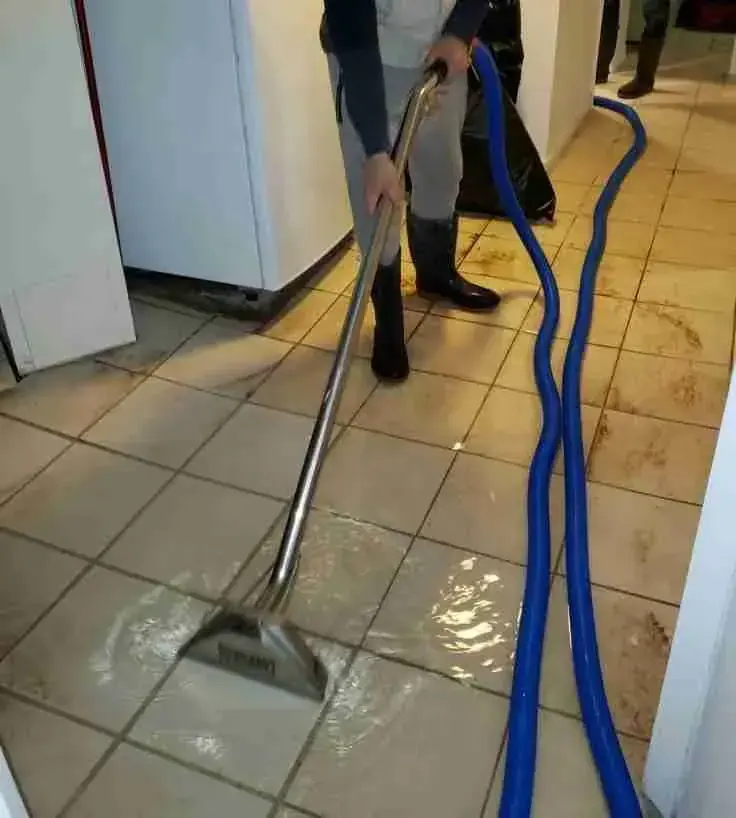
Extraction removes the water that can be seen. Structural drying removes the rest, the moisture held inside drywall, framing, subfloor and concrete, using air movement and dehumidified air until readings match dry reference materials. Every building dries at its own pace.
How the equipment works together
- Air movers push dry air across wet surfaces to lift moisture
- LGR dehumidifiers pull that moisture out of the air and drain it away
- Desiccant units handle cooler or very wet spaces where LGR units struggle
- Cavity drying systems push dry air into closed wall bays
- Thermal imaging and meters show where moisture is hiding
Placement changes as the building dries. Wet areas get airflow first, and units move or switch off once readings drop, which keeps electricity use down and avoids over-drying finished wood.
Lomita climate and older buildings
Lomita has mild winters and warm summers, with about 14 inches of rain a year, so outdoor air is rarely extreme. Drying still relies on equipment rather than weather, because open windows cannot pull moisture out of drywall and framing.
About 78.9% of the city's housing units were built before 1980, and older buildings often have thick plaster or layered finishes that hold water longer. Drying time depends on those materials, which is why no calendar answer applies.
Daily checks and the dry standard
A technician returns to measure temperature, humidity and moisture content at the same spots each visit and records the results. Equipment stays only while those numbers still improve, and it comes out once wet materials match unaffected reference readings.
Those logs also give an adjuster proof that the dry-out was finished before repairs began. For the first step, see water extraction in Lomita, or estimate the timeline with the drying time estimator.
Step by step
The structural drying process in Lomita
- 1
Map
Meters and thermal imaging outline wet materials.
- 2
Place
Air movers and dehumidifiers are set to match the wet areas.
- 3
Monitor
Daily readings steer changes to equipment and airflow.
- 4
Release
Equipment leaves once every material reads dry.
Where the crews work
Structural drying across Lomita and nearby communities
Structural drying runs wherever water has reached a building in ZIP 90717, from apartments and shops around Downtown Lomita and Narbonne Avenue to houses near Lomita Park and the hilly area south of Via Madonna.
The same service nearby: structural drying in Wilmington, Rolling Hills Estates, Carson.
More water services
Related water damage services in Lomita
Common questions
Questions about structural drying in Lomita, CA
Why are open windows and house fans not enough?
Outdoor air rarely carries away moisture trapped inside drywall and framing. Dehumidifiers pull water out of the air, and air movers push dry air across wet surfaces, which a window cannot do.
What is the difference between LGR and desiccant units?
LGR dehumidifiers work well in warm rooms and typical losses. Desiccant units use a drying wheel, cope with cool or very wet conditions and are common on Class 4 jobs such as plaster, concrete or hardwood.
How does the crew know when a wall is dry?
Readings in the wet wall are compared with a dry wall of the same material in the same building. When both match, and a thermal camera shows no cool wet patches, the wall is released.
Can drying be skipped if the surface looks dry?
A dry-looking floor can hide a wet subfloor or wall cavity. Skipping the dry-out invites mold and swollen materials, so readings, not appearance, decide when drying is done.
Does an older Lomita building dry differently?
It can. Older plaster, thick trim and layered flooring hold moisture longer than newer drywall, so those spots get extra measurements and sometimes longer equipment runs.
Emergency dispatch, Lomita, CA
Dry the structure completely before repairs begin
The drying team in Lomita maps the moisture, sets equipment by the readings and logs every visit until walls, floors and framing match the dry standard.