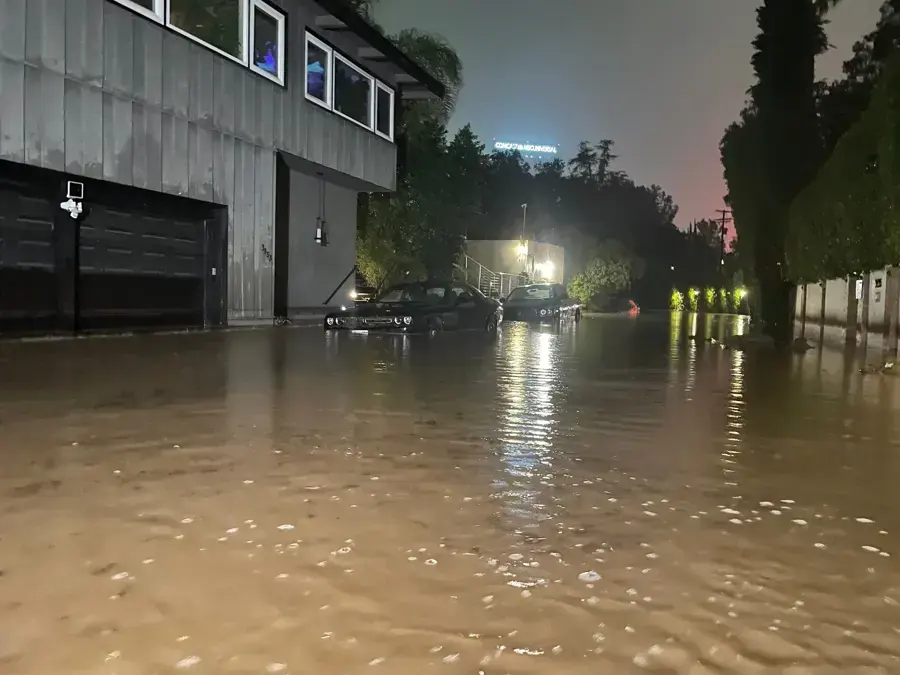
Rolling Hills Estates sits on the Palos Verdes Peninsula, where canyons, hillsides and neighborhood streets all shed rain. FEMA flood maps show no special flood hazard areas in the city, yet storm water still finds its way into homes.
Key takeaways
- The city's Safety Element lists canyon flash floods, saturated hillside mudflows and shallow flooding in streets and residences from poor storm drainage.
- Canyon flash floods are short lived because the watersheds are small, but a short flood can still leave water, mud and debris at a door.
- Keep gutters, downspouts and ground level drains clear, and keep sandbags, plywood and plastic sheeting ready, as the city's flood preparedness page advises.
- Storm water inside a home is Category 3: the extraction crew removes mud and water, cuts out soaked materials and disinfects before drying.
- Photograph the high water mark before cleanup starts, and call your insurer early about outside water.
Why a city with no mapped flood hazard still gets water in homes
FEMA flood maps show no special flood hazard areas in Rolling Hills Estates. The city's Safety Element still lists three local storm problems: flash floods in canyon areas, saturated mudflows on hillsides, and shallow flooding in streets and residences from poor storm drainage.
A floodplain map shows broad, regular flood zones. These local problems are smaller and faster, and they can reach one house without touching the house beside it.
The city reports average annual rainfall of 11.72 inches. On steep ground, even a single strong storm can send a lot of that water downhill at once, which is why storm and flash flood cleanup in Rolling Hills Estates often begins with mud as well as water.
Three ways storm water reaches a hillside home
Canyon flash floods
The main surface waters in the city are Agua Amarga Canyon Creek, Agua Magna Canyon Creek, Sepulveda Canyon, Agua Negra Canyon, Fern Creek, Bent Springs Canyon, George F. Canyon and Blackwater Canyon.
Because the canyon watersheds are small, flash floods in them are short lived. A short flood can still push water, mud and debris against a foundation, a patio or a door.
Mudflows on saturated hillsides
When the soil on a slope is soaked, it can slide as a mudflow. Mud that reaches a house is heavy, abrasive and mixed with whatever the slope was holding, so it is handled as contaminated storm water.
Shallow street flooding from weak drainage
The Safety Element also names shallow flooding in streets and residences from poor storm drainage. A clogged inlet, or a drain that cannot keep up, can turn the low point of a street into a pond at a garage door.
The homeowner's side of drainage
The Safety Element says the city will cooperate with Los Angeles County Public Works in maintaining storm drains, and will educate residents about drainage systems that are the homeowner's responsibility.
The city's flood preparedness page tells residents to keep gutters, downspouts and ground level drains clear, and to keep sandbags, plywood and plastic sheeting ready for storm water problems.
- Clear gutters and downspouts before the first storm of the season.
- Keep ground level drains clear of leaves, silt and trash.
- Keep sandbags, plywood and plastic sheeting where you can reach them.
- Check that downspouts empty away from the foundation and the garage door.
A local example: the Palos Verdes Drive East drain project
In 2024 the city built a storm drain repair and infiltration project on Palos Verdes Drive East, in the bridle trail between Clubview Lane and Chandler Ranch Road and behind homes on Bridlewood Circle. It repaired a failed storm drain and added three new dry wells.
The dry wells let storm water partly soak into the ground, so less runoff reaches Machado Lake in Harbor City, where the northeast side of the Peninsula drains. The project is a local example of a storm drain that failed and of the work needed to repair it.
What to do while water is still coming in
Safety comes first when water is moving across a yard or a street. Fast water can knock an adult down, and mud hides holes, debris and sharp objects.
- Stay out of moving water on streets and in driveways.
- Switch off power to flooded rooms from a dry spot, and leave the panel alone if water is near it.
- Block doorways with sandbags, plywood or plastic sheeting if they are already on hand.
- Lift papers, electronics and valuables off the floor.
- Photograph the water, the mud and any damage before cleanup begins.
What storm water inside the house means for cleanup
Storm water that enters a home is Category 3, because it crosses slopes, yards and streets before it reaches the door. The first job is getting the water and mud out.
Water extraction comes before drying. The extraction crew pulls standing water and mud off the floors, and the mitigation team removes porous materials that soaked it up.
Water that stood on a floor, even briefly, wicks up the bottom of the walls. The drying team checks baseboards, lower drywall and wall cavities with meters, and opens the base of a wall where the readings stay high.
- Extraction: pumps and extractors take standing water and mud off the floors.
- Removal: soaked carpet, pad, insulation and the lower part of wet drywall come out.
- Disinfection: surfaces and framing are cleaned and treated with an EPA-registered antimicrobial.
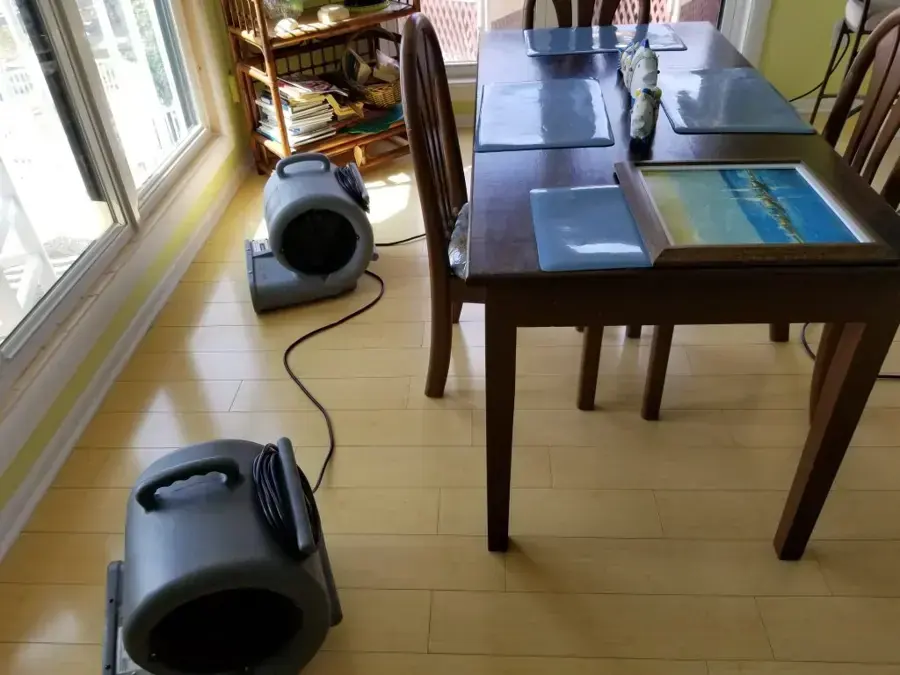
- Drying: air movers and dehumidifiers run until readings reach the dry reference.
Sorting what can be saved and what goes
After Category 3 water, the question is what can be cleaned and what has to go. Hard, nonporous items such as tile, glass and many plastics can be washed and disinfected.
Porous items soak up contaminants and are usually discarded. Photograph them before they leave the house, because the list supports the claim.
- Keep: hard surfaces and solid items that can be washed and disinfected.
- Discard: carpet pad, mattresses, soaked upholstery and soaked paper goods.
- Ask first: keepsakes and valuables that cannot be replaced, so the crew can talk through options before anything is thrown out.
Documenting the loss for a claim
A claim file for storm water holds a moisture map, daily drying logs, the water category and timestamped photos from before anything is removed. Those records show where the water entered and how it dried.
Coverage for water that enters from outside is a separate question from coverage for a burst pipe, and policies differ. Your insurer can say which applies, so call early and keep the photos.
Every service for homes in the city is listed under water damage restoration in Rolling Hills Estates, and the same standard runs through storm and flash flood cleanup across the harbor area.
Questions
Does a city with no FEMA flood hazard areas still need flood cleanup?
Yes. The Safety Element lists canyon flash floods, hillside mudflows and shallow flooding from poor drainage, and any of them can put water in a home.
Why is storm water treated as Category 3?
It crosses slopes, streets and yards before it reaches a house, so it can carry soil, oil and other contaminants. Porous materials it soaks are usually removed, not dried.
What should be ready before storm season?
The city's flood preparedness page suggests sandbags, plywood and plastic sheeting, and asks residents to keep gutters, downspouts and ground level drains clear.
Is hillside mud different from water?
Yes. Mud is heavy, carries contaminants and packs into carpet, cabinets and the bottoms of walls, so the crew removes it before drying starts.
Does homeowners insurance cover storm water?
It depends on the policy and on whether the water came from outside or from a sudden pipe failure. Read the wording or ask your insurer, and keep photos of the high water mark.