Rolling Hills Estates crawl space water
Crawl Space Water Removal in Rolling Hills Estates, CA
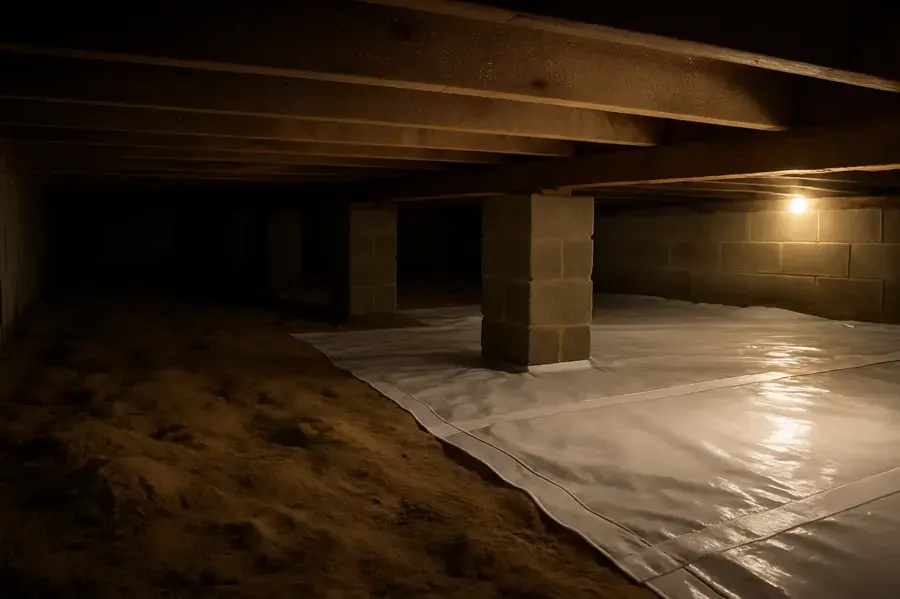
Water that collects under a raised floor soaks insulation, joists and the subfloor out of sight, so the crew pumps it out, removes wet insulation and dries the framing before it weakens the floor above.
(888) 563-9619Rolling Hills Estates crawl space water help- Standing water pumped
- Wet insulation removed
- Joists and subfloor dried
Right away
First steps for crawl space water removal in Rolling Hills Estates
- 1
Stop the source
Close the main valve if a pipe is leaking, or clear nearby drains.
- 2
Stay out of the space
Standing water and wiring under a home are hazards for anyone but the crew.
- 3
Note the signs
Record soft floors, musty smells and water seen at the vent or access door.
- 4
Call for pumping
Say whether the water looks clean, muddy or foul so the right gear comes.
How the work runs
How the Rolling Hills Estates crews approach crawl space water removal
Rapid local response
The response team dispatches 24/7 across Rolling Hills Estates and nearby communities, and active water is treated as urgent at any hour.
IICRC S500 drying standard
IICRC S500 is the industry drying standard: structural drying, not just surface drying, with equipment sized to each room.
Claim-ready documentation
Moisture maps, daily drying logs and timestamped photos taken before any demolition go into the claim file.
Local water know-how
The walkthrough checks the source, the slab or subfloor and the rooms next door, not only the room where water showed up.
What it usually costs
What does crawl space water removal cost in Rolling Hills Estates, CA?
Crawl space jobs start near $1,500 when only standing water must be pumped and reach $12,000 or more when sewage or storm water has soaked insulation, soil and framing. Access and water type decide the rest.
Standing water only
$1,500 to $3,000
- Water pumped out
- Joists probed
- Fans and dehumidifier
Wet insulation and joists
$3,000 to $6,000
- Insulation bagged out
- Subfloor dried
- Moisture logged daily
Sewage or storm water
$6,000 to $12,000+
- Category 3 cleaning
- Soil and framing treated
- Extended drying
These are typical ranges, never a quote: the water category, the square footage, the material class and how fast drying started move the number most. The water damage cost calculator gives a closer planning range, and the restoration contractor who responds sets the real scope after the walkthrough.
A flooded crawl space is out of sight, so the damage usually grows unnoticed until a floor feels soft or a musty smell reaches the rooms above. Wet insulation and joists dry slowly in a closed, dark space, which is why pumping and airflow come first.
Removing water from under the floor
- Standing water is pumped out through the access opening.
- Soaked insulation and torn vapor barrier are removed and bagged.
- Joists, beams and the subfloor are probed with a moisture meter.
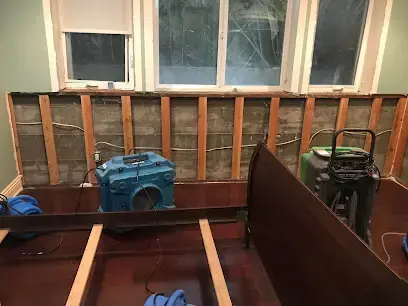
- Air movers and a dehumidifier are set to dry the cavity.
- Exposed soil and framing are treated if the water was contaminated.
Access is tight, so the crew works with lights, protective gear and small pumps rather than full-size equipment. Where water came from a broken supply pipe it is clean, but sewage or storm runoff calls for a full Category 3 cleaning of soil and framing.
Why water ends up under a home here
Where a home has a raised floor, runoff from a slope, canyon drainage or a broken pipe can end up underneath. Local soils include expansive clays that shrink and swell, and much of the city sits on Monterey Formation shale that is conducive to land sliding.
Downspouts that discharge beside the foundation and grading that slopes toward the house are common reasons water collects under a raised floor, and the walkthrough looks for both.
Drying the space and preventing a repeat
After pumping, the space is dried until joists and subfloor readings are normal. A vapor barrier laid back over bare soil and clear drainage away from the house keep the problem from returning.
Water from a sewer or storm source is also covered under sewage backup cleanup and storm and flash flood cleanup.
Step by step
The crawl space water removal process in Rolling Hills Estates
- 1
Pump
Standing water is pumped out through the access opening.
- 2
Clear
Soaked insulation and torn vapor barrier come out.
- 3
Dry
Air movers and a dehumidifier dry joists and the subfloor.
- 4
Check
Readings confirm dry framing before the space is closed.
Where the crews work
Crawl space water removal across Rolling Hills Estates and nearby communities
Crawl space work covers raised-floor homes across Rolling Hills Estates, from hillside streets in Los Ranchos Verdes and Ranchview to Rolling Hills Country Club Estates, Masongate and Montecillo, in ZIP codes 90274 and 90275.
The same service nearby: crawl space water removal in Wilmington, Lomita, Carson.
Water damage restoration in Rolling Hills Estates · every town covered
More water services
Related water damage services in Rolling Hills Estates
Common questions
Questions about crawl space water removal in Rolling Hills Estates, CA
How does water get under a raised floor?
Common paths are slope runoff, downspouts that empty beside the foundation, high groundwater after heavy rain and broken supply or drain pipes. Finding the path matters, because pumping alone will not stop a repeat.
Is standing water under the house dangerous?
It can be. Water near wiring, or water that came from a sewer or storm source, is a hazard, so entry is left to the crew. Clean supply-pipe water is far lower risk but still needs fast drying.
Must soaked crawl space insulation be replaced?
In most cases. Soaked insulation holds water against the subfloor and stops it drying, so it is removed and replaced once the framing reads dry. Insulation that only dampened can sometimes be dried.
Why does a crawl space smell musty after water?
Wet wood, soil and insulation in a closed space give off a damp odor that can drift up through the floor. Pumping, drying the framing and restoring a clean vapor barrier remove the cause.
What does insurance say about crawl space water?
Sudden pipe failures are often considered, while seepage, groundwater and flood are commonly excluded or need separate coverage. The cause shapes the claim, so the source and the photos matter.
Emergency dispatch, Rolling Hills Estates, CA
Water under your Rolling Hills Estates home?
The extraction crew pumps the space, removes wet insulation and dries the joists and subfloor until readings are normal.