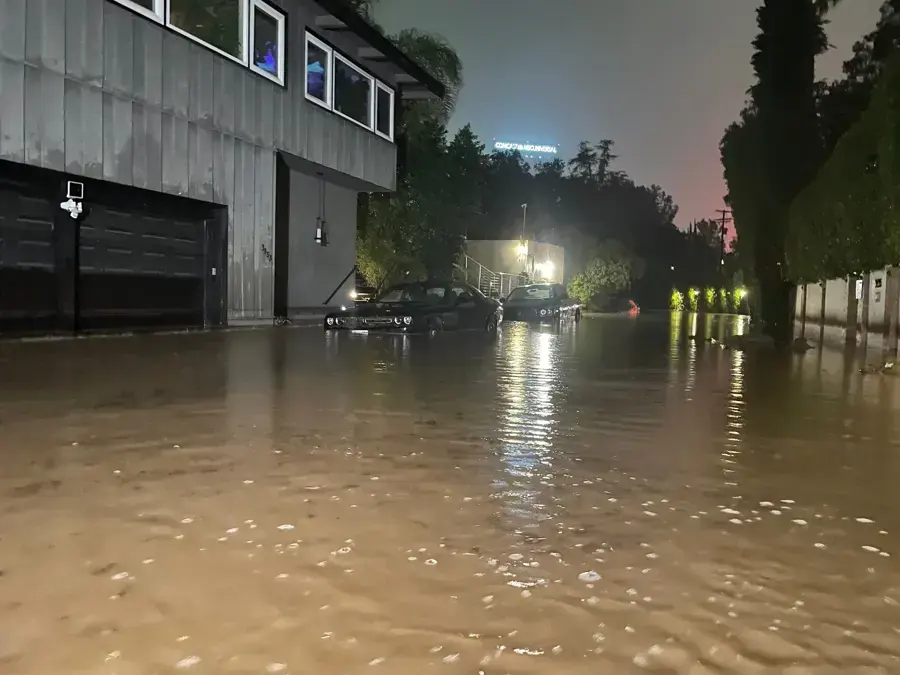
In August 2026, king tides pushed water over parts of Long Beach, and in early September Tropical Storm Marie's swells drove water and sand into the Peninsula. Seawater in a house is a different problem from rain or a broken pipe.
Key takeaways
- Seawater and sand in a home are treated as Category 3: the extraction crew removes the water and sand first, and soaked porous materials come out.
- The August 2026 king tides reached Bay Shore Avenue, and the September 2026 swells carried water and sand into streets and houses along the Peninsula.
- Salt left behind can hold moisture and corrode metal, so the crew flushes and cleans surfaces before drying.
- The city's flood page says standard homeowner policies exclude flood damage, so ask about flood coverage and keep dated photographs.
- Photograph each room now as a baseline, and move vehicles, papers and electronics up when high tides are forecast.
What happened on the Peninsula in August and September 2026
In August 2026, king tides sent water over parts of Long Beach night after night, and it reached Bay Shore Avenue. Ahead of every high tide, crews raised the sand berm on the Peninsula.
In early September 2026, Tropical Storm Marie's swells carried water and sand up into streets and houses along the Peninsula. Roughly 20 homes right on the seawall were given evacuation notices.
A king tide is an especially high tide. When one lines up with swells or a storm, water reaches streets and yards that normally stay dry.
Why the Peninsula sits close to the water
Alamitos Bay lies between Long Beach and Seal Beach, protected by the natural sand spit called the Peninsula and by the Long Beach Breakwater. When tides and swells run high, the homes along that spit sit close to the water.
The restoration work that follows is described under water damage restoration in Long Beach.
Safety first while seawater is standing
Standing seawater hides debris, holes and live wiring. The first decisions are about people, not belongings.
- Follow city notices and leave when told to.
- Do not wade through seawater near outlets, appliances or downed wires.
- Switch off power to flooded rooms from a dry spot, and leave the panel alone if water is near it.
- Keep children and pets out of the water and away from the mud it leaves.
- Photograph the water level and the damage before anything is moved.
Sand, salt and seawater: what makes the cleanup different
Why seawater in a house is Category 3
Seawater carries sand, silt, debris and bacteria from the bay and the street, so crews handle it as Category 3 water. It also leaves salt behind.
Salt keeps some materials damp and can corrode metal, which is why the crew flushes and cleans surfaces before it dries them. Porous materials that soaked up the water, such as carpet, pad and the lower part of drywall, are removed.
- Sand and silt settle into carpet, cabinets and the bottoms of walls and must be removed, not just rinsed.
- Salt residue can hold moisture and corrode metal, wiring and appliance parts.
- Debris from the street and the shore can carry contamination into every room the water touched.
What the extraction crew handles first
In water extraction, the crew pumps standing water and removes sand before it is ground into flooring. Sand left behind scratches floors and clogs equipment.
A flush with clean water then carries salt out of the structure. The mitigation team follows with cleaning and disinfecting of hard surfaces and framing, using an EPA-registered antimicrobial.
Drying a house after tidal flooding
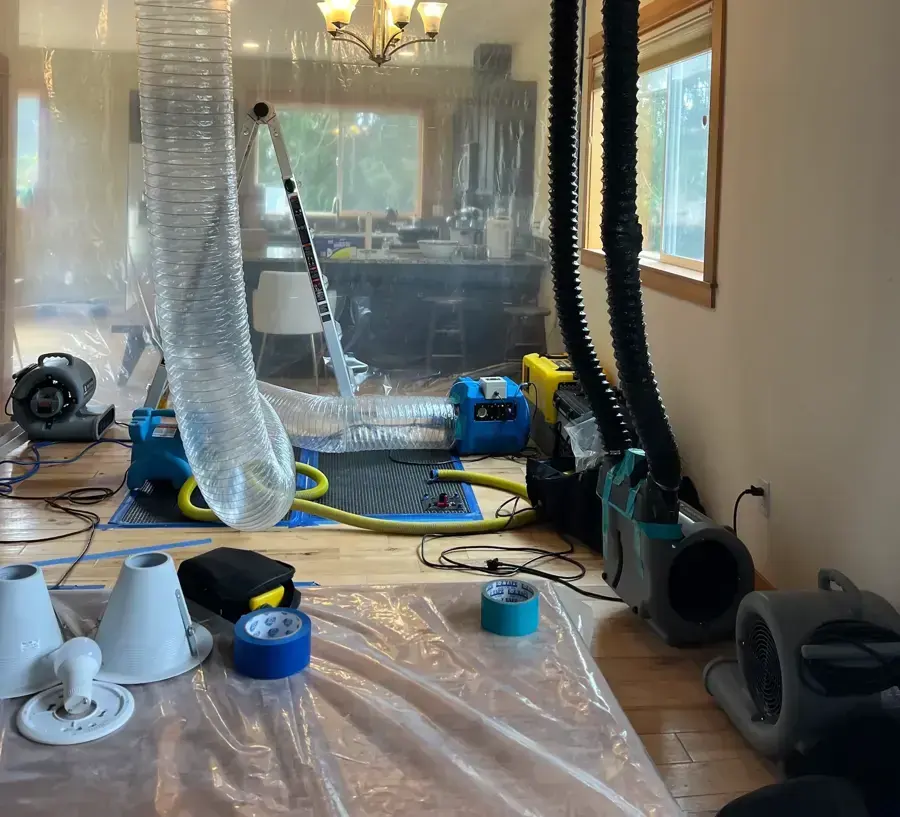
Storm and flash flood cleanup ends with structural drying. The drying team maps moisture, sets air movers and dehumidifiers, and checks walls, subfloors and cabinet bases with meters.
Coastal air adds a wrinkle. Long Beach has frequent low clouds and fog on summer mornings, and heat and high humidity can sometimes coincide, so readings and not the weather decide when the structure is dry.
Wood floors and cabinets that took on salt water can swell or cup, so the team checks them before deciding what stays. Wet materials left alone for 24 to 48 hours can start to grow mold, which is why equipment goes in as soon as the water and sand are out.
- Moisture mapping of floors, walls and cabinet bases.
- Equipment sized to each room.
- Daily readings, with the equipment staying until the structure reaches the dry reference.
Belongings and appliances after seawater
Salt and sand do more harm to belongings than clean water does. Metal rusts, wood swells and circuits corrode, so speed in rinsing matters.
Hard items such as glass, tile and many plastics can be rinsed with clean water and disinfected. Porous items soaked in seawater, such as upholstery, mattresses and paper goods, are usually discarded.
- Rinse salt off hard items with clean water as soon as it is safe to do so.
- Do not plug in or run appliances, televisions or computers that sat in seawater until a technician checks them.
- Photograph belongings and list them before they leave the house.
- Ask about keepsakes and documents before anything is thrown out.
Flood coverage, claim records and repair costs
What the policy covers
The city's flood page says Long Beach participates in the National Flood Insurance Program, and it points out that standard homeowner policies exclude flood damage. It is worth checking, well before the next high tide, whether a policy includes flood coverage.
A claim file for seawater holds dated photographs, the water category, a list of what was removed and the drying logs.
When repairs reach half of a building's value
FEMA's adopted Flood Insurance Rate Maps are the source of the 100 year floodplain on the city's flood page. The city's flood page also summarizes a program rule: when repairs or improvements to a building in a flood zone reach half of its market value, the building has to meet the requirements for new construction.
Whether that rule applies depends on where the building sits, and the city's building department can say.
Getting ready for the next high tide
Tides repeat, so preparation pays. Moving a few things up and knowing where the shutoffs are can save a great deal of work, and the same steps apply to any storm and flash flood cleanup call across the harbor area.
- Move vehicles, papers and electronics to higher ground when high tides are forecast.
- Know where the main water shutoff and the electrical panel are, and keep a flashlight handy.
- Photograph each room now, so there is a baseline for a claim.
- Keep gutters and drains near the house clear so rain does not add to tidal water.
Questions
Is seawater the same as storm water for cleanup?
Both are Category 3, but seawater also leaves salt and heavy sand behind, so the crew flushes surfaces and removes sand before drying.
Why does sand matter so much?
Sand scratches floors, clogs pumps and packs into carpet and cabinets. It has to be removed, not just rinsed away.
Does homeowners insurance cover tidal flooding?
The city's flood page says standard homeowner policies exclude flood damage. Ask your insurer whether a flood policy applies, and keep dated photographs.
How is a house dried after seawater?
The crew removes sand and wet materials, flushes salt from surfaces, then runs air movers and dehumidifiers until readings reach the dry reference.
What should I do when the city sends an evacuation notice?
Follow the notice and leave when told. Documenting the damage after it is safe to return still helps the claim.
How soon should cleanup start after the tide goes out?
As soon as it is safe to return. Water and sand left in a house keep soaking into materials, and wet wood left alone for 24 to 48 hours can start to grow mold.