Long Beach water extraction
Water Extraction and Removal in Long Beach, CA
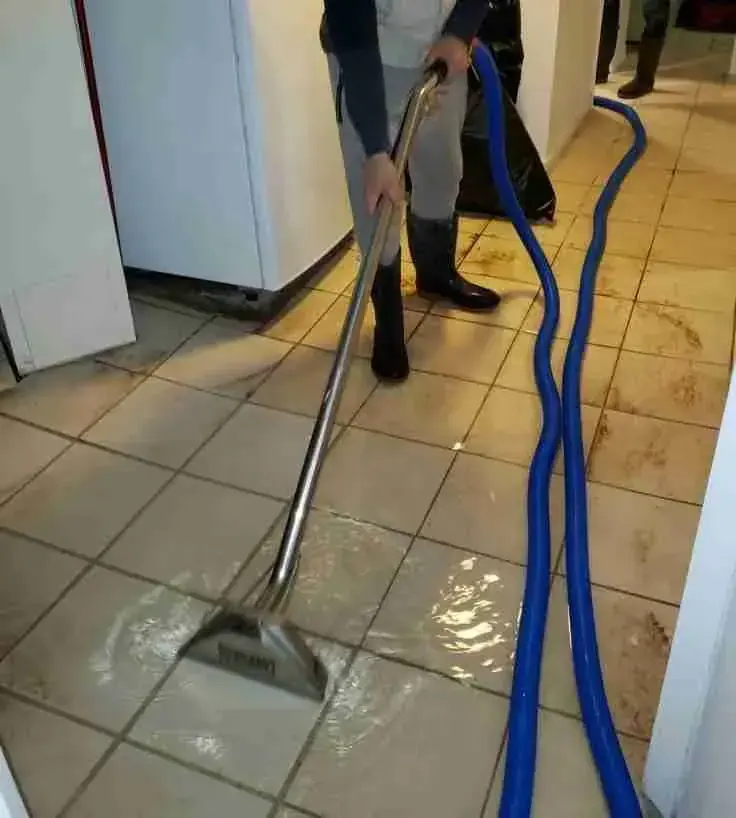
Water that sits on a floor keeps moving into the pad, baseboards and wall bottoms. The extraction crew removes it with truck-mounted pumps and wands, then maps what moisture remains in the building.
(888) 563-9619Long Beach water extraction help- Truck-mounted pumps
- Pad and wall checks
- Moisture logged each visit
Right away
First steps for water extraction in Long Beach
- 1
Stop the flow
Close the fixture valve or the main so the water stops adding to the damage.
- 2
Clear the floor
Move rugs, electronics and small furniture out of the water and set heavy pieces on blocks.
- 3
Avoid live outlets
Stay out of standing water near cords and outlets until power to that room is off.
- 4
Report the details
Tell the crew the source, the rooms affected and any odor, since gray or black water changes the plan.
How the work runs
How the Long Beach crews approach water extraction
Rapid local response
The response team dispatches 24/7 across Long Beach and nearby communities, and active water is treated as urgent at any hour.
IICRC S500 drying standard
IICRC S500 is the industry drying standard: structural drying, not just surface drying, with equipment sized to each room.
Claim-ready documentation
Moisture maps, daily drying logs and timestamped photos taken before any demolition go into the claim file.
Local water know-how
The walkthrough checks the source, the slab or subfloor and the rooms next door, not only the room where water showed up.
What it usually costs
What does water extraction cost in Long Beach, CA?
Water extraction in Long Beach usually costs $1,200 to $2,400 for one clean-water room. Several rooms run $2,400 to $4,500, and whole floors or Category 3 water reach $4,500 to $9,000 or more.
A single room of clean water
$1,200 to $2,400
- Pumps and wands
- Pad lifted if soaked
- Dryers set and logged
Several rooms affected
$2,400 to $4,500
- Wet pad removed
- Wall bottoms probed
- Longer equipment runs
A full floor or Category 3 water
$4,500 to $9,000+
- Carpet and pad out
- Disinfectant applied
- Drying throughout
These are typical ranges, never a quote: the water category, the square footage, the material class and how fast drying started move the number most. The water damage cost calculator gives a closer planning range, and the restoration contractor who responds sets the real scope after the walkthrough.
Standing water is the first problem in nearly every Long Beach loss, whether it came from a failed hose in an apartment or a main break that flooded a garage. Extraction comes before drying because liquid water cannot be dehumidified out of a building.
Where Long Beach extraction calls start
- The October 2024 water main break in California Heights, near Orange Avenue and East Wardlow Road
- The February 2025 break in Bixby Hill, where homes and garages along Surrey Drive flooded
- Two storms in February 2024 that brought nearly 10 inches of rain in about a week
- King tides in August 2026 and the early September 2026 swells from Tropical Storm Marie
- Everyday failures such as supply hoses, water heaters and overflowing tubs
Each source leaves a different kind of water behind. Clean supply water, gray water from an appliance and storm or sewage water are sorted before work starts, because the category sets the protective gear, the disinfectant and what must be removed. Heavy contamination moves into sewage backup cleanup procedures.
How the water comes out
Deep water goes first through submersible pumps, then truck-mounted vacuums and weighted wands work carpet, tile and hardwood. Pad that has soaked through is cut and lifted, since it holds water that no wand can reach.
Hardwood and tile are checked for water trapped underneath, and baseboards are pulled back where meters show moisture in the wall bottom. Anything that stays wet becomes a drying target, not an afterthought.
What happens once the standing water is gone
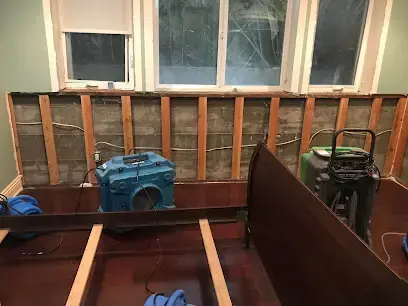
A meter and a thermal camera map the damp areas, and air movers and dehumidifiers are set from those readings, the core of structural drying. Mold can begin on damp materials within 24 to 48 hours, which is why the equipment goes in during the same visit as the extraction.
Moisture readings are logged at every return visit, and equipment is removed only when each material matches its dry reference.
Step by step
The water extraction process in Long Beach
- 1
Survey
Meters and a thermal camera mark where the water traveled.
- 2
Extract
Pumps and wands remove the standing water, and wet pad is lifted.
- 3
Dry
Air movers and dehumidifiers are placed from the readings.
- 4
Verify
Logged readings must reach dry targets before equipment leaves.
Where the crews work
Water extraction across Long Beach and nearby communities
Extraction crews work across Long Beach, from Downtown apartments and Belmont Shore homes to Naples, Bixby Knolls, Los Cerritos, Zaferia and the industrial buildings of the Magnolia Industrial Group district, day or night.
The same service nearby: water extraction in Wilmington, Signal Hill, Carson.
More water services
Related water damage services in Long Beach
Common questions
Questions about water extraction in Long Beach, CA
What is the difference between extraction and drying?
Extraction removes liquid water with pumps and vacuums. Drying removes moisture held in materials and air with air movers and dehumidifiers. Skipping the second step leaves wet framing behind a dry-looking floor.
Can wet carpet in Long Beach be saved?
Carpet soaked by clean water can often stay when it is extracted and dried quickly, though the pad usually goes. Carpet touched by gray or black water is removed because it cannot be cleaned reliably.
How does tide or storm flooding change the job?
Water pushed in by a king tide or storm surge carries street and bay debris, so it is handled as Category 3, as in storm and flood cleanup. Porous materials come out and the space is disinfected before drying begins.
Does a street main break need extraction?
Yes, whenever water reaches the building. The February 2025 break in Bixby Hill flooded homes and garages along Surrey Drive, and any wet floor or wall bottom from a break needs extraction and drying.
How long can wet materials sit before problems start?
Mold can begin on damp materials within 24 to 48 hours, so standing water comes out first and drying equipment follows during the same visit.
What should be photographed before extraction starts?
The water level on walls, the source of the leak, damaged belongings and the date. Photos like these support an insurance claim and show the adjuster what the loss looked like before cleanup.
Emergency dispatch, Long Beach, CA
Standing water in Long Beach should come out before it spreads
Describe the source and the rooms affected, and the drying team plans pumps, air movers and a moisture map around the loss.