Long Beach structural drying
Structural Drying and Dehumidification in Long Beach, CA
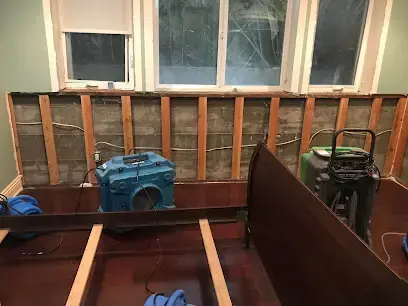
Wet drywall is only part of the problem. Framing, subfloors and concrete hold water long after the surface looks dry, and the drying team uses meters and a dehumidifier plan to reach them.
(888) 563-9619Long Beach structural drying help- LGR and desiccant dehumidifiers
- Psychrometric daily logs
- Thermal camera checks
Right away
First steps for structural drying in Long Beach
- 1
Control the source
Shut off the water source so the wet area stops growing.
- 2
Open interior doors
Keep interior doors open so air can move through every wet room.
- 3
Skip box fans
Do not run box fans that push damp air into dry rooms.
- 4
Record the room
Photograph wet walls and floors, and note the date and the thermostat setting.
How the work runs
How the Long Beach crews approach structural drying
Rapid local response
The response team dispatches 24/7 across Long Beach and nearby communities, and active water is treated as urgent at any hour.
IICRC S500 drying standard
IICRC S500 is the industry drying standard: structural drying, not just surface drying, with equipment sized to each room.
Claim-ready documentation
Moisture maps, daily drying logs and timestamped photos taken before any demolition go into the claim file.
Local water know-how
The walkthrough checks the source, the slab or subfloor and the rooms next door, not only the room where water showed up.
What it usually costs
What does structural drying cost in Long Beach, CA?
Structural drying in Long Beach costs $1,500 to $3,000 for one area. Several rooms with opened walls run $3,000 to $7,000, and a Class 4 loss or a whole floor reaches $7,000 to $14,000+.
One affected area
$1,500 to $3,000
- Limited wet materials
- Air movers and an LGR unit
- Readings every visit
Rooms with opened walls
$3,000 to $7,000
- Wall cavities dried
- Several dehumidifiers running
- Psychrometric logs daily
Class 4 or a whole floor
$7,000 to $14,000+
- Desiccant dehumidifiers
- Slab or plaster drying
- Extended monitoring
These are typical ranges, never a quote: the water category, the square footage, the material class and how fast drying started move the number most. The water damage cost calculator gives a closer planning range, and the restoration contractor who responds sets the real scope after the walkthrough.
Structural drying is the long middle of every water job, after water extraction clears the standing water and before the rebuild. It is a measured process, where equipment is placed, adjusted and removed based on psychrometric readings, not on a fixed number of days.
How Long Beach air affects drying
Low clouds and fog are frequent on Long Beach summer mornings, and heat and high humidity can sometimes coincide. Damp air holds less extra moisture, so an LGR dehumidifier has to work harder to pull water out of drywall, wood and concrete.
The crew reads temperature, relative humidity and the moisture content of materials each visit, then adjusts equipment to match the room instead of repeating the same layout. When the air turns dry, the same readings show when equipment can be scaled back.
Equipment and what each tool does
- Air movers sweep wet surfaces and push moisture into the air
- LGR dehumidifiers pull that moisture out of the room
- Desiccant dehumidifiers dry concrete, plaster and other dense materials
- Thermal cameras show wet areas behind surfaces
- Moisture meters confirm what the camera suggests
Classes of loss and when drying is finished
Class 1 and 2 losses involve limited wet materials, while Class 4 losses involve dense materials such as concrete, plaster or hardwood that release water slowly. The class sets how many dehumidifiers run and how long monitoring continues.
Drying is finished when each material matches its dry reference, which is taken from similar unaffected materials in the same building. Equipment comes out then, and the final readings go to the owner and the adjuster in the drying log. Commercial properties follow the same method under commercial water damage schedules.
Step by step
The structural drying process in Long Beach
- 1
Map
Meters and a thermal camera find wet materials.
- 2
Place
Dehumidifiers and air movers go in by loss class.
- 3
Adjust
Equipment shifts as the readings change.
- 4
Release
Machines leave when materials match a dry reference.
Where the crews work
Structural drying across Long Beach and nearby communities
Structural drying covers Long Beach homes, apartments, shops and offices, from Belmont Shore, Naples and the Peninsula to Downtown, Bixby Knolls, Los Cerritos, Rose Park, Wrigley and North Long Beach, wherever fog and humidity slow the job.
The same service nearby: structural drying in Wilmington, Signal Hill, Carson.
More water services
Related water damage services in Long Beach
Common questions
Questions about structural drying in Long Beach, CA
How does the crew know when drying is finished?
Each material is compared with a dry reference taken from similar unaffected material in the same building. When readings match, the equipment comes out and the drying log is shared with the owner and adjuster.
Why not run the same equipment for a set number of days?
Every building dries differently. Summer fog, high humidity, material density and the size of the loss all change the pace, so readings decide when equipment is moved, added or removed.
What is the difference between LGR and desiccant dehumidifiers?
LGR units work well in warm, humid rooms and handle most jobs. Desiccant units pull moisture from very dry or cold air and are used on dense materials such as concrete, plaster and thick hardwood.
Can walls and floors be dried without removing them?
Often, when the materials are only damp. Injected air, small access holes and cavity drying work on intact drywall. Saturated insulation, sagging drywall and swollen flooring usually have to come out.
Is structural drying needed after a small leak?
Yes, if any material beyond the surface got wet. Even a modest leak can leave moisture in wall bottoms, subfloors and cabinet bases that stays after the visible puddle is cleaned up.
Emergency dispatch, Long Beach, CA
A building in Long Beach is dry when the readings say so
Tell the drying team what got wet and when, and the walkthrough sets the dehumidifier plan, the monitoring visits and the dry reference for each material.