Long Beach had two notable water main breaks in recent years. In October 2024 a break in California Heights led to a boil water notice, and in February 2025 a break in Bixby Hill flooded homes and garages.
Key takeaways
- A home's own shutoff valve cannot stop a break in the street, so the first moves are safety, reporting the break and protecting what the water has not reached.
- Water from a main starts clean, but it can pick up soil, oil and debris on its way into a garage, so the category is judged by what it crossed.
- A boil water notice, like the October 2024 notice for about 125,000 customers, concerns drinking water and does not change how a flooded structure is dried.
- Extraction comes first, then wet drywall, carpet and stored boxes are sorted, and structural drying runs until readings reach the dry reference.
- Photograph the garage and belongings before anything moves, and ask your insurer early.
Two Long Beach main breaks, two different problems
The reports on the two breaks describe very different effects: in California Heights, a boil water notice for customers, and in Bixby Hill, water in homes and garages.
The full list of services for homes is under water damage restoration in Long Beach.
February 7, 2025: Bixby Hill
A water main break reported around 4:30 a.m. flooded homes and garages in the Bixby Hill neighborhood, including along Surrey Drive. Swift water rescues were reported.
October 9, 2024: California Heights
A main break near Orange Avenue and East Wardlow Road led Long Beach Utilities to issue a boil water notice for about 125,000 customers in the 90805 and 90807 ZIP codes and part of 90806. The utility lifted the notice early, on October 11, after 117 water sample analyses came back clean.
What kind of water comes out of a street main
Water from a main starts as clean drinking water. It does not stay clean once it floods a driveway, crosses soil and sweeps into a garage.
Restoration crews sort water into categories by what it touched. Clean water that has crossed soil, picked up oil or sat among stored chemicals and trash is treated as contaminated, and porous materials it soaked are removed instead of dried.
- Category 1: clean water straight from a supply source.
- Category 2: water with some contamination, such as clean water that has crossed a dirty surface.
- Category 3: grossly contaminated water, which includes sewage and most outside flood water.
Safety first: moving water, power and the garage
The valve at a house controls water inside the house. It cannot stop a break in the street, because that shutoff belongs to the utility.
- Stay out of moving water, which can knock an adult off their feet.
- Do not drive through water on the street.
- Do not step into a flooded garage or ground floor if water is near outlets, panels or appliances. Switch power off from a dry spot, or wait for an electrician.
- Have a mechanic check any vehicle whose floor or electronics sat in water before it is started.
- Report the break to the water utility if it has not already been reported.
- Photograph the water level, the street and the damage before cleanup begins.
What to tell the crew when you call
A few facts help the crew plan the first visit and bring the right equipment. They are quick to gather even in the middle of a flood.
- Where the water entered and where it is now, such as the garage, a hallway or the bedrooms.
- How deep it is, and whether it is still rising or has stopped.
- Whether the power is on, and whether any outlets or appliances are underwater.
- What is on the floor: carpet, stored boxes, furniture or a vehicle.
- Whether the water came from the street or from a pipe inside the house.
Garages and ground floors: extraction, removal and drying
Extraction and removal
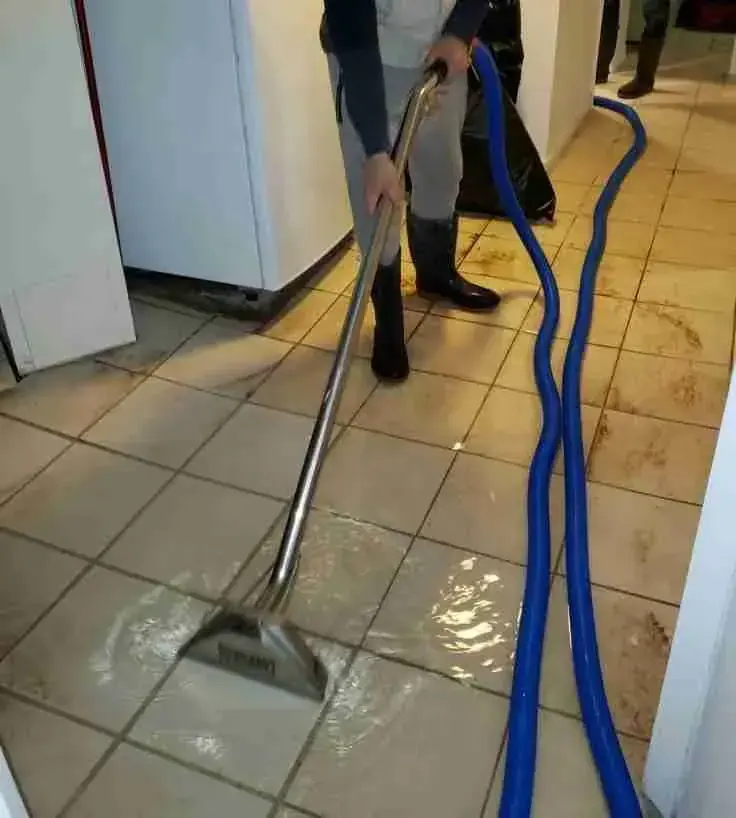
In water extraction, the crew pumps or vacuums standing water from the garage and ground floor first. A concrete garage slab does not soak up much water, but stored boxes, cabinets and the carpet in nearby rooms do, and they hold it.
The mitigation team then sorts what can stay. Cardboard, paper and fabric that sat in water are usually discarded, hard items can be cleaned, and wet drywall is cut out above the highest wet reading.
Water that stood on a floor, even briefly, wicks up the bottom of the walls and into baseboards and cabinet bases. The crew checks those with a meter instead of trusting how dry the surface looks.
- Standing water pumped and vacuumed from every affected room.
- Carpet and pad pulled where they soaked through.
- Lower drywall and insulation cut out above the highest wet reading.
- Stored boxes and cardboard sorted, with photographs before disposal.
Drying after the water is out
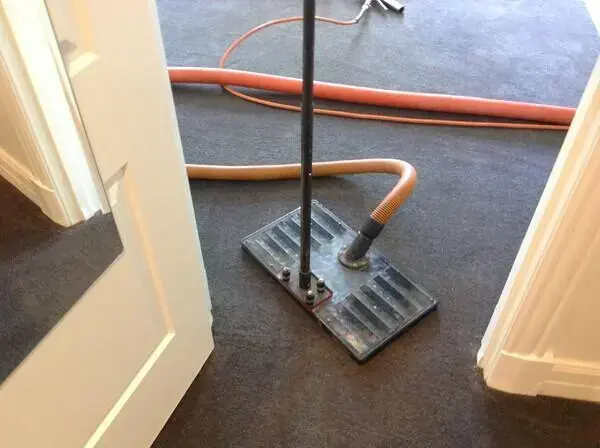
Structural drying starts once the standing water is gone. The drying team maps moisture in walls, subfloors, garage framing and cabinet bases, then sets air movers and dehumidifiers.
Daily readings steer the work. The equipment stays until the framing and the other materials reach the dry reference, which is within 2 to 4 points of a dry material.
- Moisture mapping of walls, floors, framing and cabinets.
- Air movers and dehumidifiers sized to each room.
- Daily readings, with equipment moved as areas dry.
A boil water notice and a flooded house are separate questions
A boil water notice is about drinking water. The October 2024 notice covered about 125,000 customers in 90805, 90807 and part of 90806, and the utility lifted it early on October 11 after 117 water sample analyses came back clean.
The notice does not change how a flooded structure is dried. If water came into a garage or ground floor, the wet materials still need to be extracted, sorted and dried, whatever the status of the drinking water.
Documenting the loss, and who pays
The claim file holds photographs, the water category, the list of what was removed and the drying logs. Photograph the garage and the belongings before anything is moved or thrown out.
Who pays for damage from a street main break is a separate question from the cleanup. The restoration crew documents the loss and does not decide it, so ask your insurer early and keep every record.
The same steps apply to water extraction across the harbor area.
Questions
Can I shut off the water to stop a main break?
The valve at the house controls water inside the home, but a break in the street is controlled by the utility. Report the break and protect the house.
Is water from a main safe to touch?
It starts clean, but it can pick up soil, oil and debris in a garage or on a driveway. Treat it with caution and let the crew judge the category.
Does a boil water notice mean the flooded house is contaminated?
No. The notice concerns drinking water. The flooded materials are judged by what the water crossed, not by the notice.
Should I throw out stored boxes after a garage floods?
Cardboard, paper and fabric that soaked up water are usually discarded, while hard items can often be cleaned. Photograph everything before it goes.
Does insurance cover damage from a street main break?
It depends on the policy and on the facts. Read the wording or ask your insurer, and keep the photographs and drying records with the claim.