Hidden leak under the floor
Slab Leak Water Damage in Carson, CA
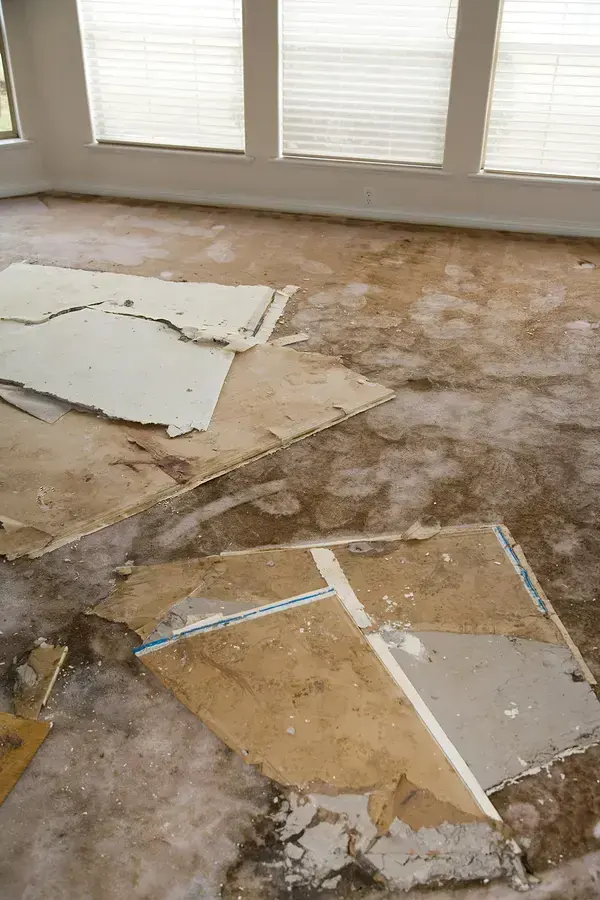
A leak under the floor can soak flooring and wall bottoms before a stain shows. In Carson's older homes, the drying team traces the wet area, opens it and dries the slab.
(888) 563-9619Call about a Carson slab leak- Hidden leak tracing
- Flooring lifted safely
- Slab dried to target
Right away
First steps for slab leak water damage in Carson
- 1
Check the water meter
Shut every fixture off and see whether the meter still moves.
- 2
Feel the floors
Walk barefoot over tile and wood to find warm or damp patches, then mark them with tape.
- 3
Photograph the signs
Capture stains, cupped boards and swollen baseboards with dated photos.
- 4
Call plumber and restorer
Leak repair and drying are separate jobs, and both should start early.
How the work runs
How the Carson crews approach slab leak water damage
Rapid local response
The response team dispatches 24/7 across Carson and nearby communities, and active water is treated as urgent at any hour.
IICRC S500 drying standard
IICRC S500 is the industry drying standard: structural drying, not just surface drying, with equipment sized to each room.
Claim-ready documentation
Moisture maps, daily drying logs and timestamped photos taken before any demolition go into the claim file.
Local water know-how
The walkthrough checks the source, the slab or subfloor and the rooms next door, not only the room where water showed up.
What it usually costs
What does slab leak water damage cost in Carson, CA?
Slab leak drying in Carson ranges from $2,000 for a small leak caught early to $14,000 or more when water spreads under several rooms. The depth of the wet slab and the flooring involved set where a job lands.
Small leak, found early
$2,000 to $3,500
- One flooring area lifted
- Slab and wall bottoms dried
- Five to seven drying days
One or two rooms wet
$3,500 to $7,500
- Tile, laminate or wood removed
- Lower drywall checked
- LGR drying with daily logs
Water under several rooms
$7,500 to $14,000+
- Wide flooring removal
- Cabinet toe kicks opened
- Extended slab drying
These are typical ranges, never a quote: the water category, the square footage, the material class and how fast drying started move the number most. The water damage cost calculator gives a closer planning range, and the restoration contractor who responds sets the real scope after the walkthrough.
Many Carson homes are older, with about 80.8 percent built before 1990 and a median build year in the mid-1960s. When a leak hides under a concrete floor, the first sign is often a damp spot, warm flooring or a water bill that climbs.
How a slab leak shows itself
- A warm or damp patch on flooring that never dries
- Water meter movement while every fixture is off
- Baseboards swelling or paint bubbling low on a wall
- The sound of running water in a quiet house
- Musty smell or cupped flooring in one area
None of these proves a slab leak on its own, since other leaks and humidity can look similar. A plumber confirms the source, and the restoration team handles the water that has already spread into flooring and walls, beginning with water extraction wherever it pooled.
What the dry-out involves under the flooring
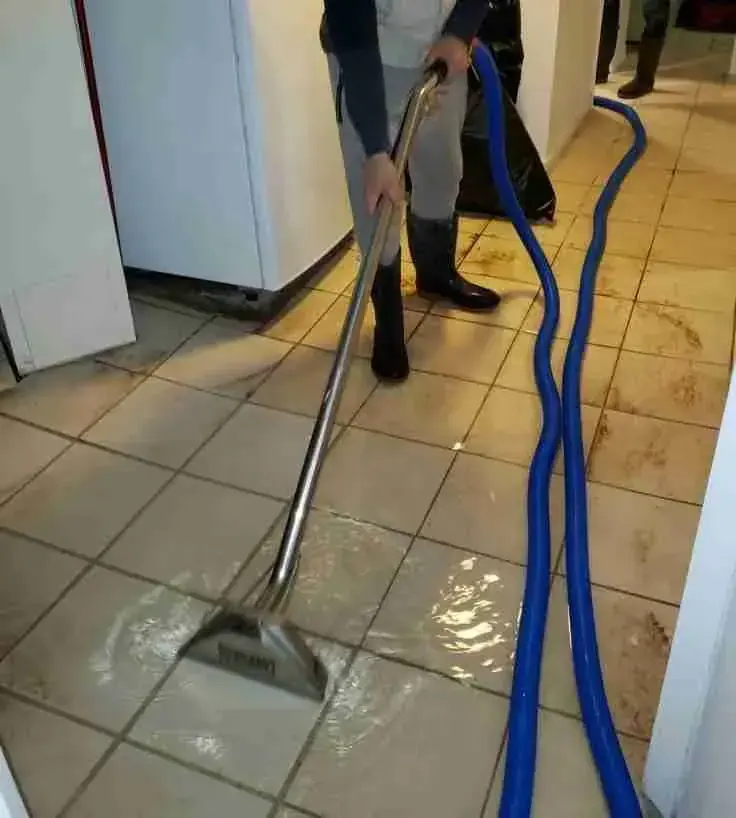
The drying team finds the wet footprint with meters and a thermal camera, then lifts tile, laminate or wood where moisture sits. Tile that is still solid and dry is left in place. Wall bottoms and cabinet toe kicks are probed because water wicks upward from the slab.
Concrete holds moisture far longer than drywall, so LGR dehumidifiers and air movers run until slab readings settle, which can take noticeably longer than a wall-only loss. Readings are logged on every visit.
Working with the plumber and the adjuster
The leak itself is a plumbing repair, often done before or alongside drying so new water does not keep feeding the area. Insurance treatment of slab leaks varies by policy, which is why photos and readings are saved from the first visit.
If the leak ran for weeks, the loss can widen into walls, cabinets and neighboring rooms, which adds structural drying and a longer monitoring period to the plan.
Step by step
The slab leak water damage process in Carson
- 1
Trace
Meters and a thermal camera outline the wet footprint.
- 2
Expose
Wet flooring is lifted so the slab surface can release moisture.
- 3
Dehumidify
LGR dehumidifiers and air movers pull moisture from the slab.
- 4
Verify
Slab readings are logged until they match the dry reference points.
Where the crews work
Slab leak water damage across Carson and nearby communities
Slab leak work covers homes and ground-floor units across Carson, including Dominguez Hills and Carousel Tract, and buildings along Del Amo Boulevard, Sepulveda Boulevard and Wilmington Avenue, with one drying standard throughout.
The same service nearby: slab leak water damage in Wilmington, Lomita, Signal Hill.
More water services
Related water damage services in Carson
Common questions
Questions about slab leak water damage in Carson, CA
Who fixes the leak, and who dries the floor?
A plumber locates and repairs the leak, while the restoration team removes wet flooring and dries the slab and walls. The two jobs overlap, and drying works best once the source has stopped feeding the floor.
Does every older Carson home have slab leak risk?
Not necessarily. Carson's median home dates to 1965 in Cal Water's 2025 plan and 1967 in the Census Bureau's 2024 estimate, and age raises the odds that something fails, but a leak depends on the home's own foundation and plumbing.
Can tile floors hide a slab leak?
Yes. Tile and sealed floors can look perfect while water collects beneath them and at the base of nearby walls, so readings matter more than appearance.
How long does a slab take to dry?
Longer than drywall or carpet, because concrete releases moisture slowly. LGR dehumidifiers run until readings match the dry reference points, and the drying team logs each visit instead of promising a set number of days.
Will insurance pay for slab leak water damage?
Coverage varies by policy. Water that escapes suddenly often counts, while long-term seepage can be excluded, and the cost of finding the leak is sometimes treated separately from the damage it caused.
What happens to a slab leak left alone?
Water keeps feeding flooring, baseboards and wall bottoms, and damp materials can grow mold after 24 to 48 hours. Early drying limits how much flooring has to be replaced.
Emergency dispatch, Carson, CA
A hidden leak under a Carson floor needs measuring
The drying team traces the wet footprint, lifts what holds water and dries the slab until readings settle, so new flooring goes down on dry concrete.