Slab leak drying, Signal Hill
Slab Leak Water Damage in Signal Hill, CA
A leaking pipe under a concrete slab shows up as warm spots, damp flooring or a rising water bill, and the drying team maps moisture before lifting any floor.
(888) 563-9619Signal Hill slab leak help- Slab moisture mapping
- Thermal camera scans
- Daily drying logs
Right away
First steps for slab leak water damage in Signal Hill
- 1
Shut the main valve
Turn off the home's main water valve so the leak stops feeding.
- 2
Check the meter
A water meter that keeps moving with every fixture off points to a hidden leak.
- 3
Clear the damp floor
Move rugs and furniture off damp areas and note where the floor feels warm.
- 4
Call two trades
Reach a plumber for detection and the restoration team for the wet materials.
How the work runs
How the Signal Hill crews approach slab leak water damage
Rapid local response
The response team dispatches 24/7 across Signal Hill and nearby communities, and active water is treated as urgent at any hour.
IICRC S500 drying standard
IICRC S500 is the industry drying standard: structural drying, not just surface drying, with equipment sized to each room.
Claim-ready documentation
Moisture maps, daily drying logs and timestamped photos taken before any demolition go into the claim file.
Local water know-how
The walkthrough checks the source, the slab or subfloor and the rooms next door, not only the room where water showed up.
What it usually costs
What does slab leak water damage cost in Signal Hill, CA?
A small slab leak caught early runs about $2,000 to $3,500 in Signal Hill, one or two wet rooms run $3,500 to $7,500, and water spread under several rooms reaches $7,500 to $14,000 or more. The cost calculator gives a first range.
Leak caught early
$2,000 to $3,500
- One area of floor lifted
- Slab and wall bottoms dried
- Five to seven drying days
One or two rooms wet
$3,500 to $7,500
- Wet flooring removed
- Lower drywall checked
- LGR drying, daily logs
Water under several rooms
$7,500 to $14,000+
- Wide flooring removal
- Toe kicks opened
- Extended slab drying
These are typical ranges, never a quote: the water category, the square footage, the material class and how fast drying started move the number most. The water damage cost calculator gives a closer planning range, and the restoration contractor who responds sets the real scope after the walkthrough.
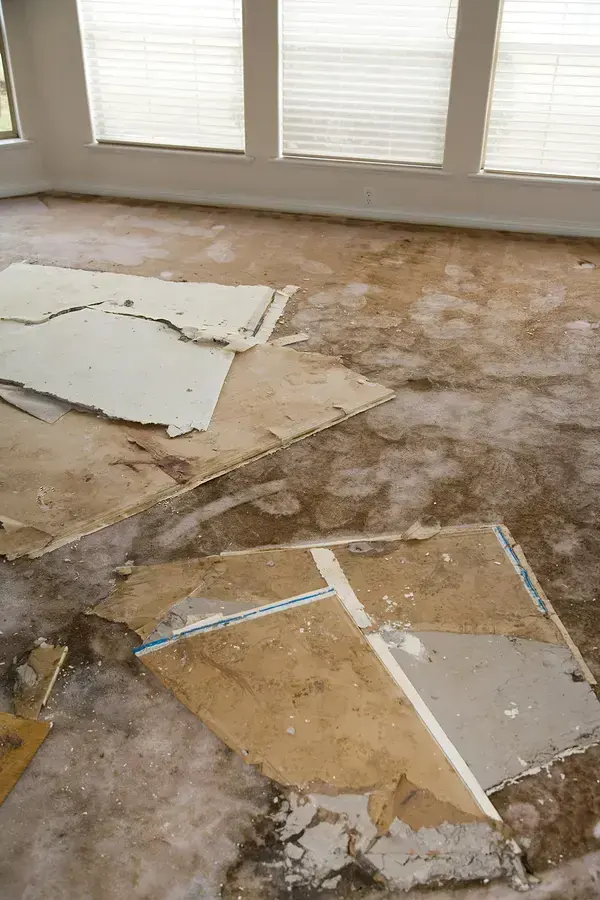
A slab leak starts in a pipe nobody can see, and by the time damage shows, water may already have spread under the flooring. The tech who does the walkthrough follows moisture readings to the real edge of the wet area, not the visible stain.
Signs that point to a slab leak
- A warm patch on the floor where a hot water pipe is leaking
- Damp carpet edges, lifting laminate or cupped wood with no visible source
- The sound of running water while every fixture is off
- A water bill that climbs while usage stays the same
- Baseboards that stain or swell along one wall
None of these signs proves a slab leak on its own, so a plumber confirms the source with leak detection while the restoration team handles the wet materials.
Ground conditions around Signal Hill
The city's Safety Element maps clayey zones with moderate expansion potential and young alluvial deposits that locally have moderate to high expansion potential, and it notes that old paralic deposits may be corrosive to concrete.
Those are background conditions, not a diagnosis, and no building is assumed to sit on a slab until the floor itself shows it. The walkthrough starts with readings from the actual floor instead of an assumption about the building.
How the dry-out proceeds
Once the plumber repairs the leak, flooring over the wet zone is removed, and toe kicks and wall bottoms are opened where readings stay high. Padding that cannot be dried goes to disposal.
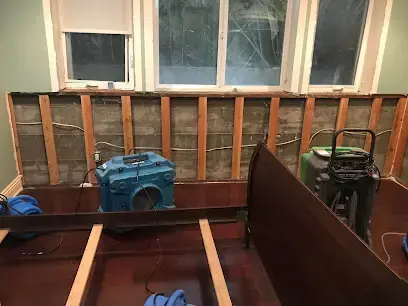
LGR dehumidifiers and air movers then pull moisture out of the slab and framing, with readings logged daily. The city's Building Permit Required handout lists plumbing alterations among work that needs a permit, a question for the plumber rather than the drying team. Related: burst pipe water damage.
Step by step
The slab leak water damage process in Signal Hill
- 1
Map
Meter and thermal camera find the wet boundary across the slab.
- 2
Uncover
Flooring over the wet zone comes up, with toe kicks opened as needed.
- 3
Dry
LGR dehumidifiers and air movers run while readings are logged daily.
- 4
Sign off
Readings at dry standard close the job before new flooring goes in.
Where the crews work
Slab leak water damage across Signal Hill and nearby communities
Where a Signal Hill house, condo or townhome has a slab floor, the same method applies, from the Hilltop Area and Crescent Heights to Cityview and Pacificwalk along Orizaba Avenue.
The same service nearby: slab leak water damage in Wilmington, Long Beach, Carson.
Water damage restoration in Signal Hill · every town covered
More water services
Related water damage services in Signal Hill
Common questions
Questions about slab leak water damage in Signal Hill, CA
How is a slab leak found?
A plumber uses acoustic and thermal leak detection to locate the pipe, while the restoration team uses moisture meters and a thermal camera to find how far water traveled under the flooring.
Does insurance cover slab leak water damage?
Policies differ on both the damage and the cost of reaching the pipe, so the claim file should carry photos and dated moisture readings from the start.
Is the flooring always replaced?
Not always. Tile can sometimes be lifted and reused, while laminate and wood that swelled usually cannot be saved. Readings decide what stays and what goes.
Can the slab dry on its own?
Concrete holds moisture for a long time, and sealed flooring traps it. Dehumidifiers and air movers shorten that, and the job ends only when readings show dry.
Does Signal Hill soil cause slab leaks?
The Safety Element describes clayey zones with expansion potential and old deposits that may corrode concrete, but it does not tie them to leaks in any one building. A plumber diagnoses the cause.
What happens to cabinets and walls?
Toe kicks are opened and wall bottoms are checked, because water wicks upward from the slab. Dry material is left in place, and wet drywall is cut out.
Emergency dispatch, Signal Hill, CA
Find the wet boundary before any floor comes up
The drying team maps moisture across the slab, opens only the flooring that has to go and dries the concrete and wall bottoms to a verified reading.